
Tooling & Mold Engineering
Rubber & Silicone Molds Compression, Transfer & LSR Injection
Full tooling and production capabilities for elastomer components: compression and transfer molds for molded elastomers and hardened LSR injection molds for high repeatability and medical compliance. We support tooling design, tryout, post‑cure, trimming automation, and cleanroom production with material traceability.
- Compression, transfer & LSR injection molds — prototype and production
- Polished cavities, controlled venting, integrated post‑cure and automated trim/inspection
- Cleanroom molding, medical‑grade tooling and full traceability (MTRs, lot control)
LSR Injection Molds — Medical & High‑Cosmetic
Compression / Transfer Molds — Large & High Durometer Parts
Post‑Cure, Trim & Automation
Primary Molding Processes
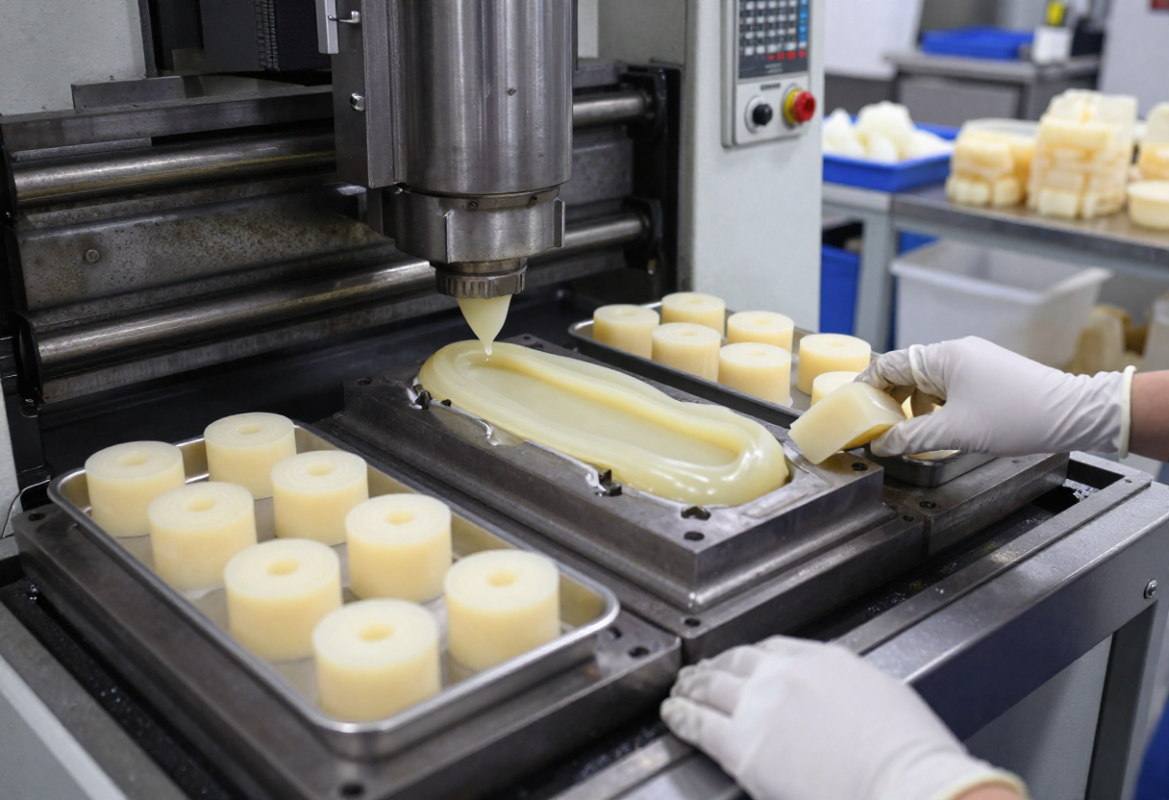
Compression Molding
Compression molding is effective for large parts and compounds not suitable for injection. Premeasured charge is placed in the cavity and compressed between heated platens. Good for lower volumes and simple geometries.
Low tooling cost vs injection for certain shapes
Careful control of charge mass and flash management required
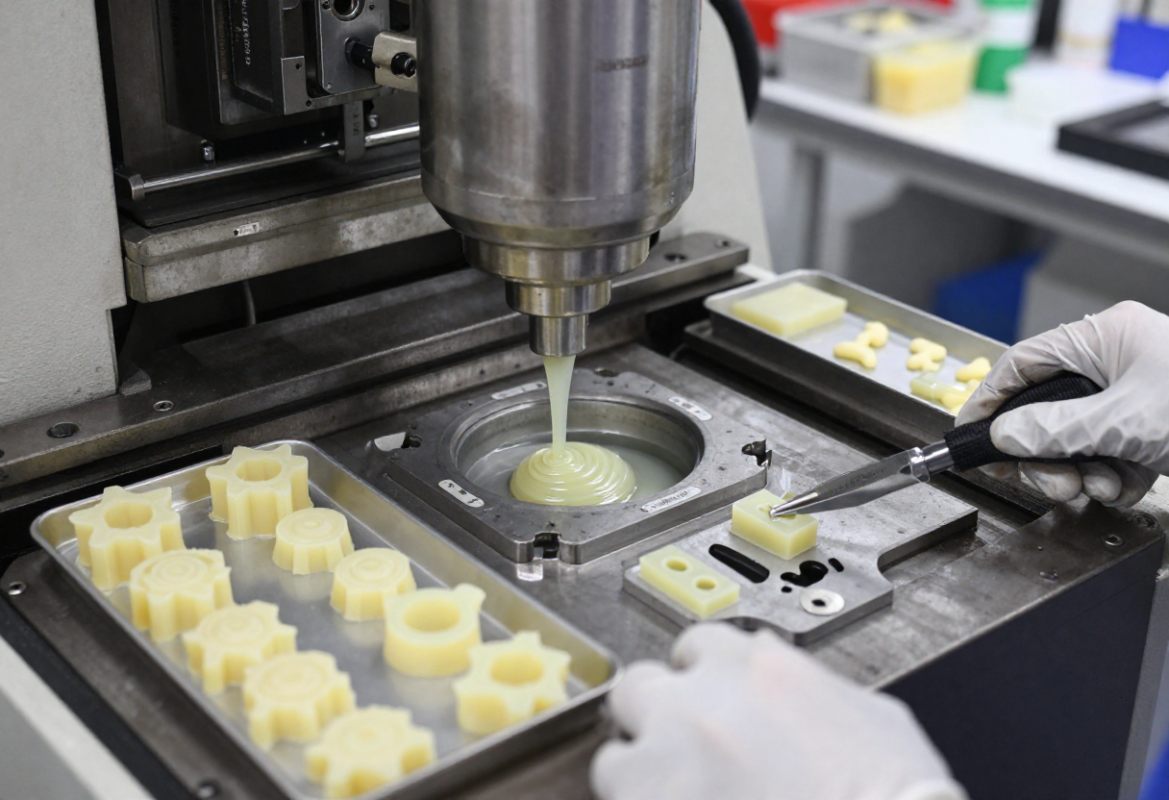
Transfer Molding
Transfer molding forces preheated elastomer through a sprue into cavity. Better flash control and repeatability than compression molding; good for complex features and more predictable fill.
Reduced gating variability and improved flash control
Suits higher volume than pure compression in many cases
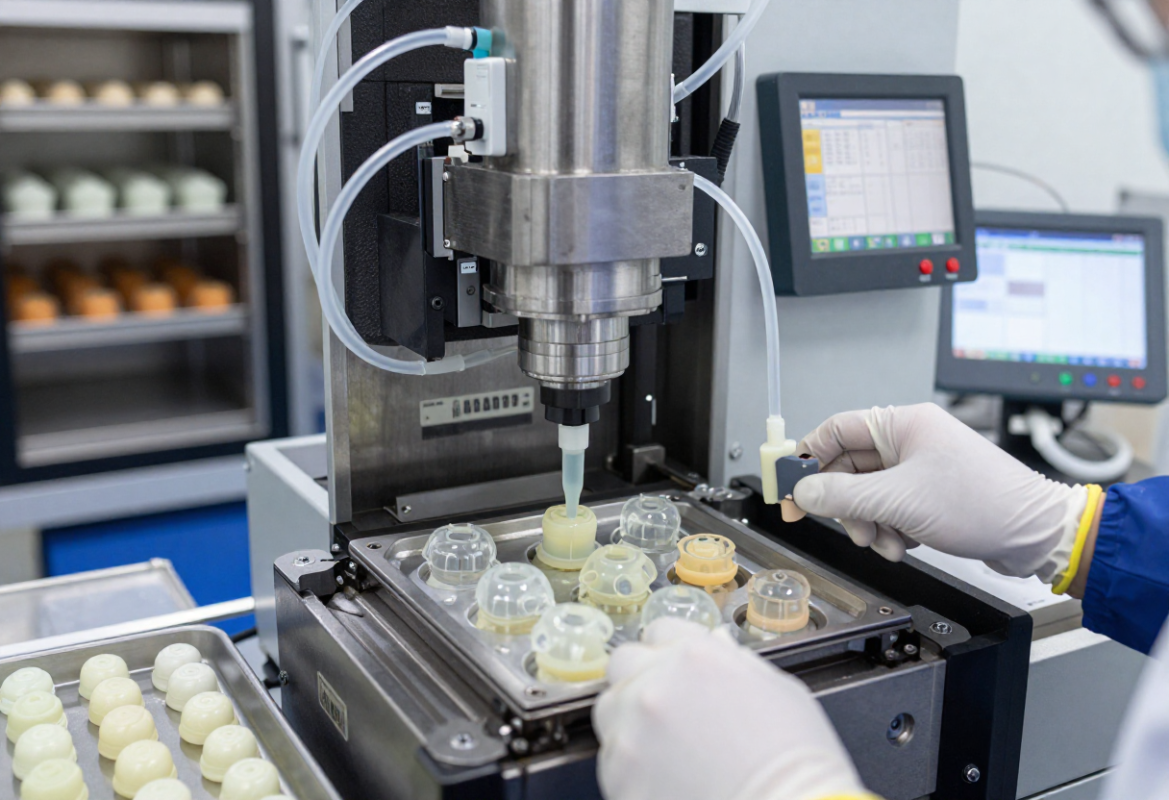
LSR Injection Molding
Liquid Silicone Rubber (LSR) is metered from two components and injected into stainless cavities. Benefits: high repeatability, low contamination, rapid cycle, excellent cosmetics and automated degating. Common for medical, baby‑safe, optical and high‑appearance parts.
Automated cells with metering pumps and dosing control
Integrated post‑cure ovens and traceable shot records
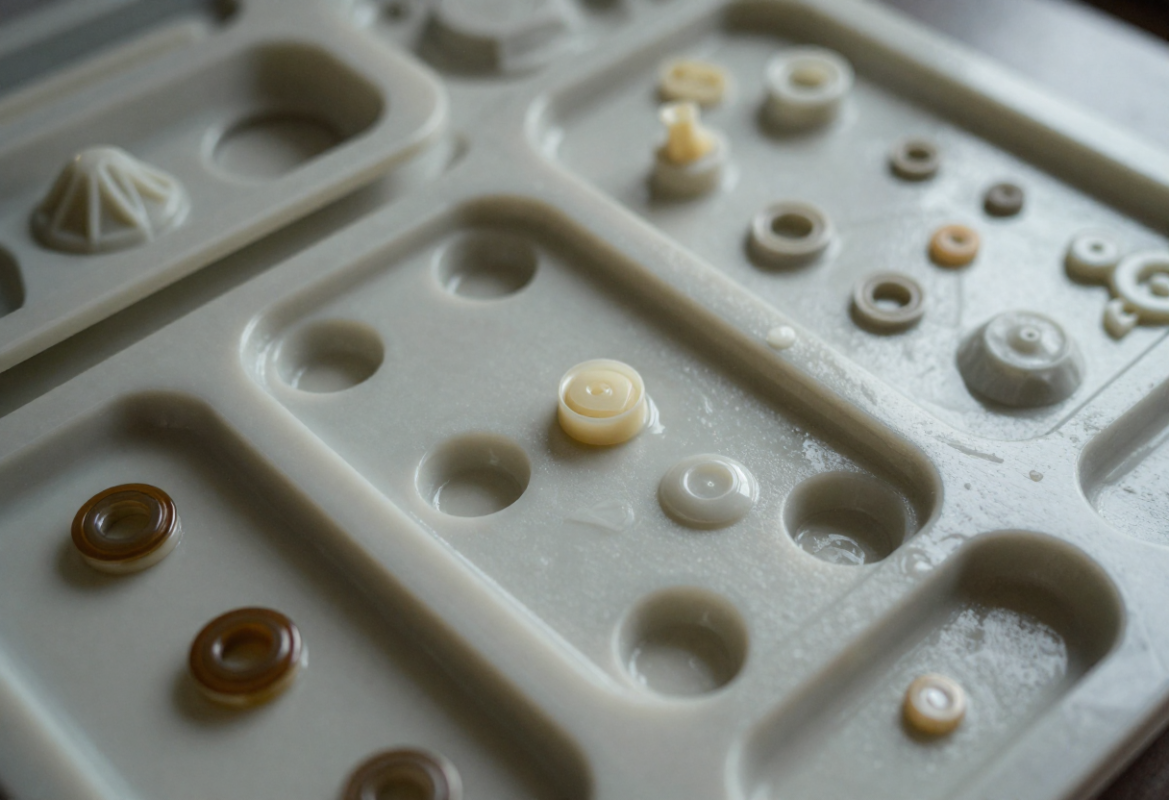
Overmolding & Insert Molding
We support overmolding of elastomers onto plastics or metal inserts, including two‑shot setups and insert fixturing in tooling. Overmolding reduces assembly steps and creates integrated seals and grips.
Tooling Design Considerations
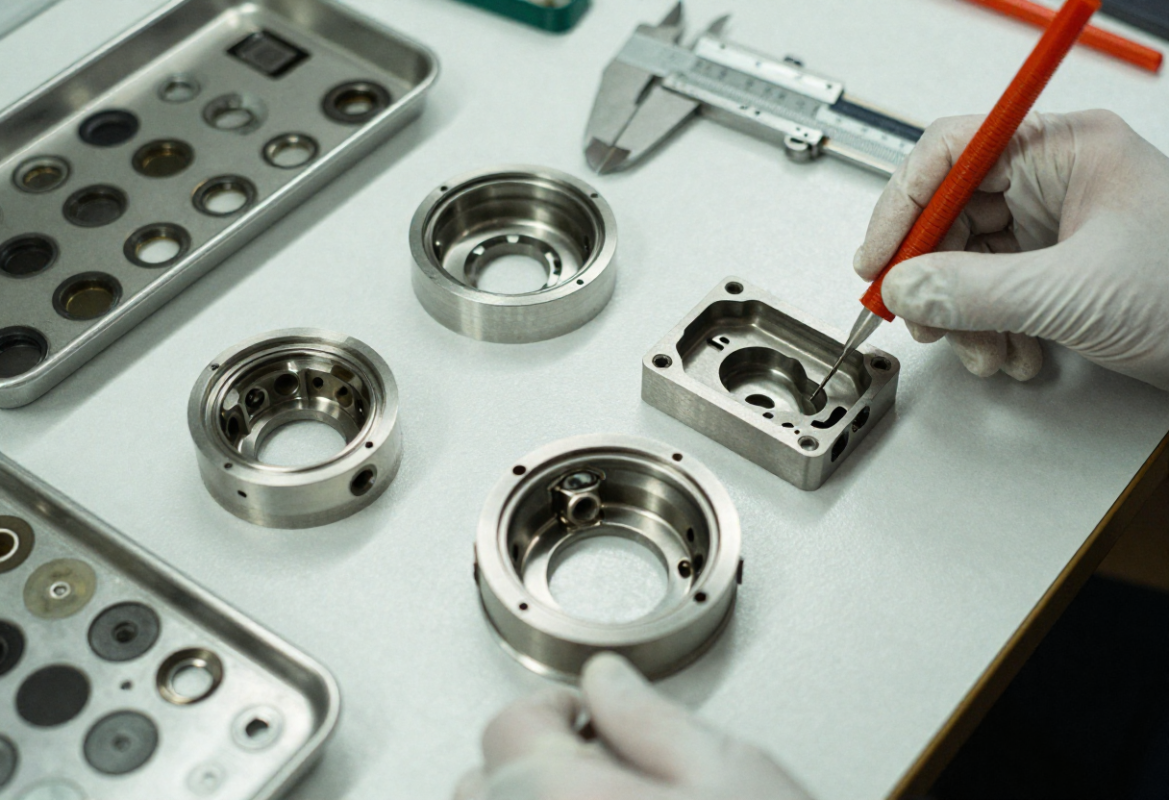
Key tooling elements for elastomers: cavity polish level (cosmetic grading), venting to allow volatiles and air escape, heated platens and controlled temperature zones, sprue/runner design for LSR flow, slides and core retention for undercuts, and insert locating for overmolds.
Design checklist
- Material selection (stainless grades for LSR; tool steels for compression inserts)
- Polish & texture specifications per cosmetic zone
- Venting strategy and gas trap placement
- Heater & thermocouple locations for uniform cure
Materials & Typical Properties
We work with LSR grades for medical/food contact, VMQ silicones, EPDM, NBR, FKM and specialty compounds. Durometers usually range Shore A 10–90. Selection is driven by temperature range, chemical exposure, compression set and regulatory requirements.
LSR
Biocompatible grades, low extractables, excellent thermal stability
EPDM / NBR
Weather & oil resistance; used in automotive seals
FKM (Viton)
High chemical and temperature resistance
TPU / TPE
When thermoplastic elastomers are preferred for recyclability or processing

Post‑Cure, Trim & Automation
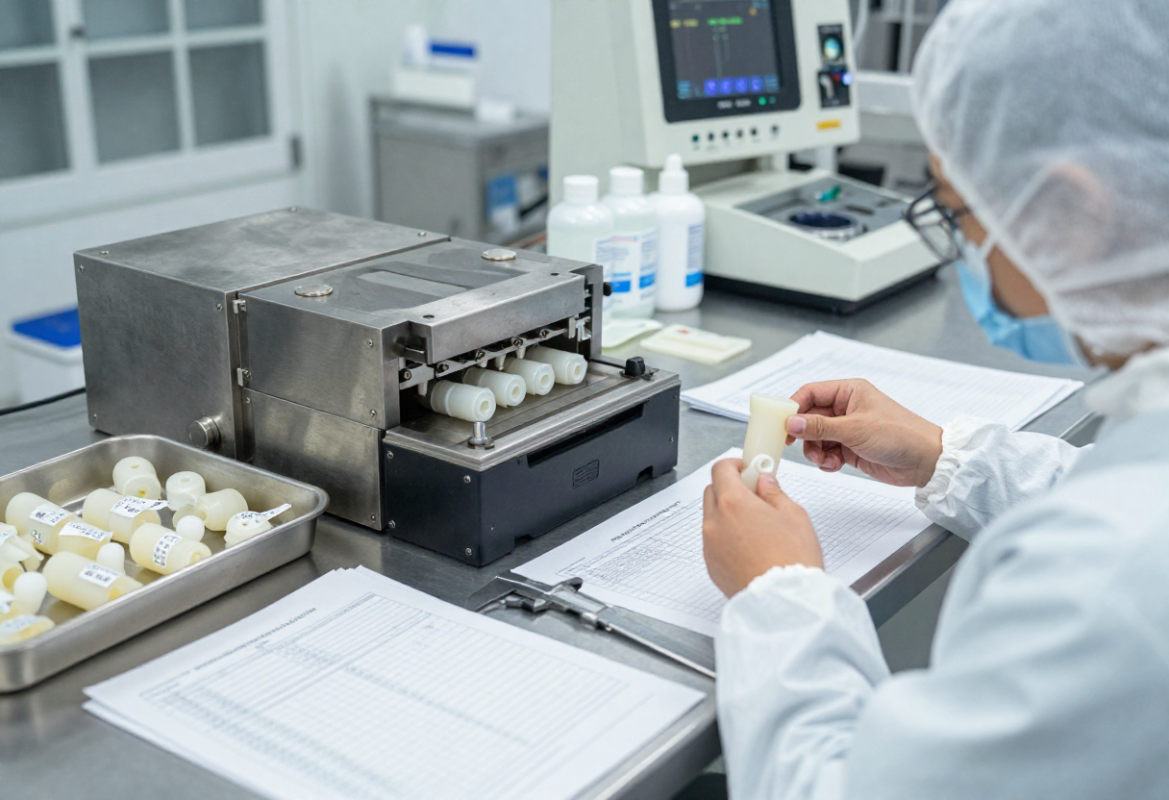
Post‑cure ovens, controlled temperature profiles, and automated trimming (waterjet, laser, punch) are integrated into production lines. For LSR, validated post‑cure schedules reduce volatile content and stabilize mechanical properties. Automated inspection (vision, dimensional) is used to control cosmetic and dimensional quality.
Typical post‑process flow
- Molded part → flash removal / degating (automated where feasible)
- Post‑cure oven (time & temperature per compound)
- Automated trim & final inspection (vision/dimension)
- Pack & serialization (for medical / lot traceability)
Cleanroom Molding & Medical Support
We provide ISO 7/8 cleanroom molding cells for medical parts, with material lot traceability, validated cleaning and packaging workflows, and documentation to support regulatory submissions (biocompatibility guidance, MTRs, production records).
Controls
- Controlled gowning, HEPA filtration and particle monitoring
- Traceable shot records and MTR linkage to lot numbers
- Validated cleaning, packaging and sterilization preps as required

Inspection, Testing & Qualification
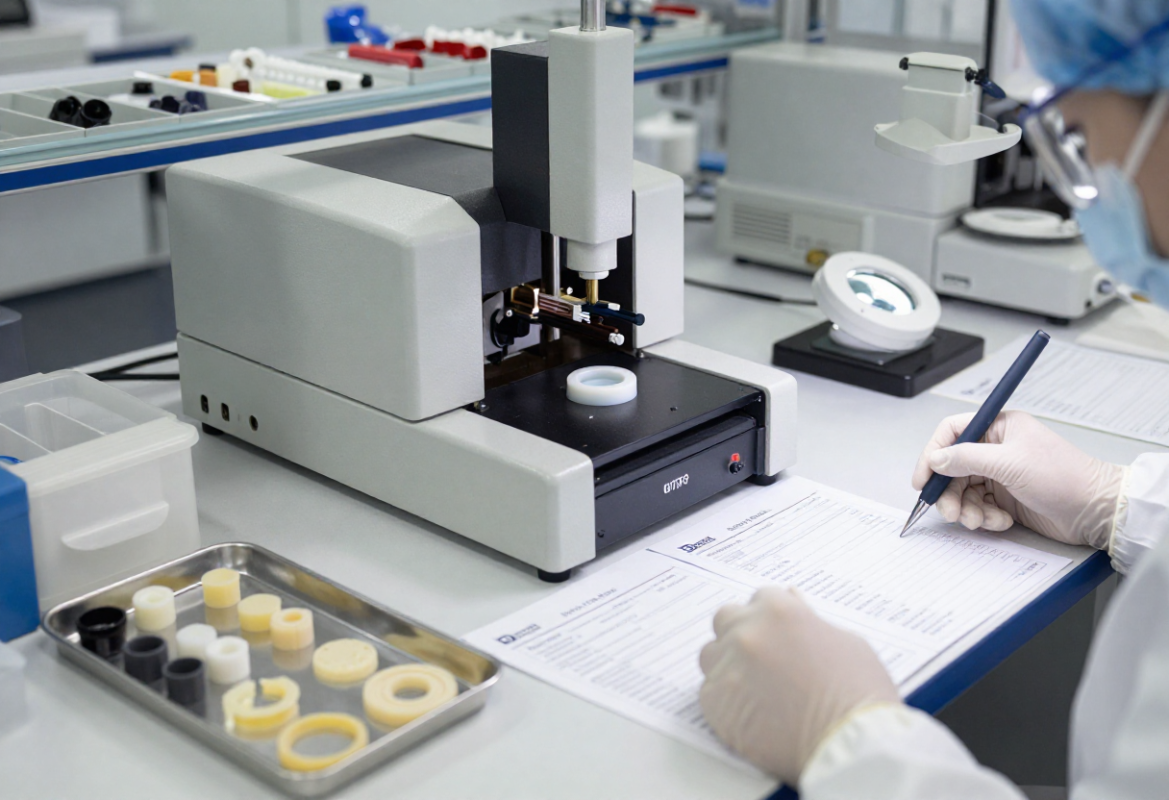
We provide dimensional inspection, durometer testing, tensile/tear tests, compression set, accelerated aging, chemical resistance testing and visual/cosmetic audits. For assemblies, we perform leak testing and functional verification as applicable.
Reporting
FAI reports, batch test summaries, SPC dashboards, and per‑lot certificates of conformance are provided to support NPI and production runs.
Inspection, Material Certificates & Testing
We provide material MTRs, hardness (durometer) reports, tensile/tear tests, compression set measurements and visual/cosmetic inspections. For medical parts we can provide extractables/biocompatibility data where required.
Cleanroom & traceability
Cleanroom molding and assembly (ISO 7/8) available for medical and optical parts with full lot traceability and serialization when required.
Tolerances & DFM Guidance
Molded elastomer tolerances are typically looser than rigid plastics: typical finished tolerances for common features range ±0.1–0.5 mm depending on geometry and durometer. Key DFM notes: minimize large unsupported thin sections, control flash zones for automated trimming, and design radii to promote uniform cure.
| Parameter | Typical Range | Notes |
|---|---|---|
| Typical tolerance | ±0.10 — ±0.5 mm | Depends on feature size & durometer |
| Durometer range | Shore A 10 — 90 | Lower durometers require larger features for retention |
| Wall thickness | 1.0 mm and up typical | Thin walls harder to fill and more variable |
| Flash allowance | Design for automated trimming | Provide sacrificial flash zones where possible |
Representative Projects

Medical Valve Seal (LSR)
Automated LSR mold with polished cosmetic cavity, validated post‑cure schedule, cleanroom production and full lot traceability; passed extractables testing and FAI acceptance.
EPDM Boot (Compression)
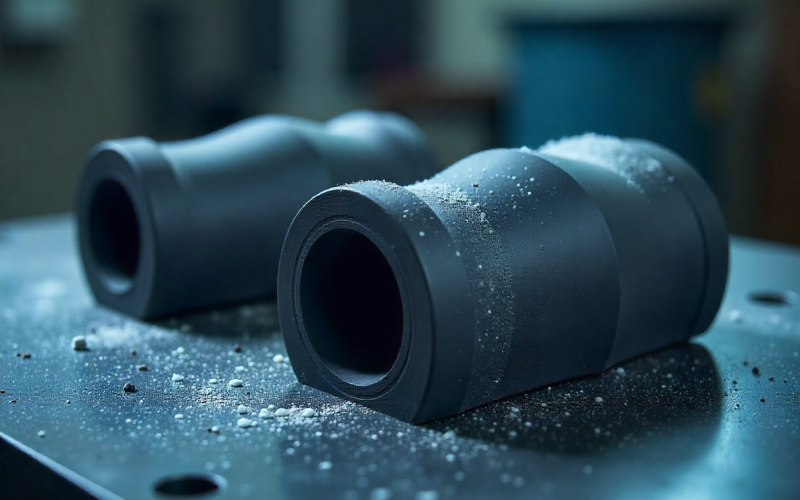
Compression mold and transfer master for automotive boot with designed flash lands for automated trimming and validated compression set over lifecycle testing.
Frequently Asked Questions
When should I choose LSR over compression molding?
Choose LSR for high cosmetic finish, medical or food contact parts, high cycle automation and low contamination. Compression is preferable for large simple parts or when molds/presses are more cost-effective for low volumes.
How do you control part variability for low durometer compounds?
Control charge mass, cavity temperature uniformity, optimized venting and use automated trimming and vision inspection to ensure consistent parts. Tooling with precise cavity control and good post‑cure stability reduces variability.
What lead times for production LSR molds?
Typical 6–12+ weeks depending on cavities, polishing, heater integration and automation. Prototype tooling for LSR or compression can be faster for validation runs (2–4 weeks).
Do you provide MTRs and lot traceability for elastomer compounds?
Yes — we maintain material certificates, lot linkage to production runs and full traceability for regulated markets including medical and automotive where required.
Start Your Elastomer Tooling Project
Upload CAD and material preferences, target volumes and required certifications. We’ll return a tooling recommendation, lead time estimate and automated post‑process plan — typically within 24 business hours.

