Tooling & Mold Engineering

Cold Plate FSW & Laser Welding Fixtures — Precision Fixturing for Thermal Assemblies

We design and manufacture fixturing and tooling for friction stir welding (FSW) and laser welding of cold plates and thermal assemblies used in power electronics, EV inverters and high‑power modules. Our fixtures control part registration, clamping, thermal sinks, reaction forces and sensor feedback for repeatable, high‑quality welds.

  • FSW fixtures: torque reaction, robust backing, sacrificial supports and Z‑axis control
  • Laser welding fixtures: precise datum registration, beam access, gas shrouding and active cooling
  • Robotic/automation interfaces, quick‑change pallets, sensors and traceable process records

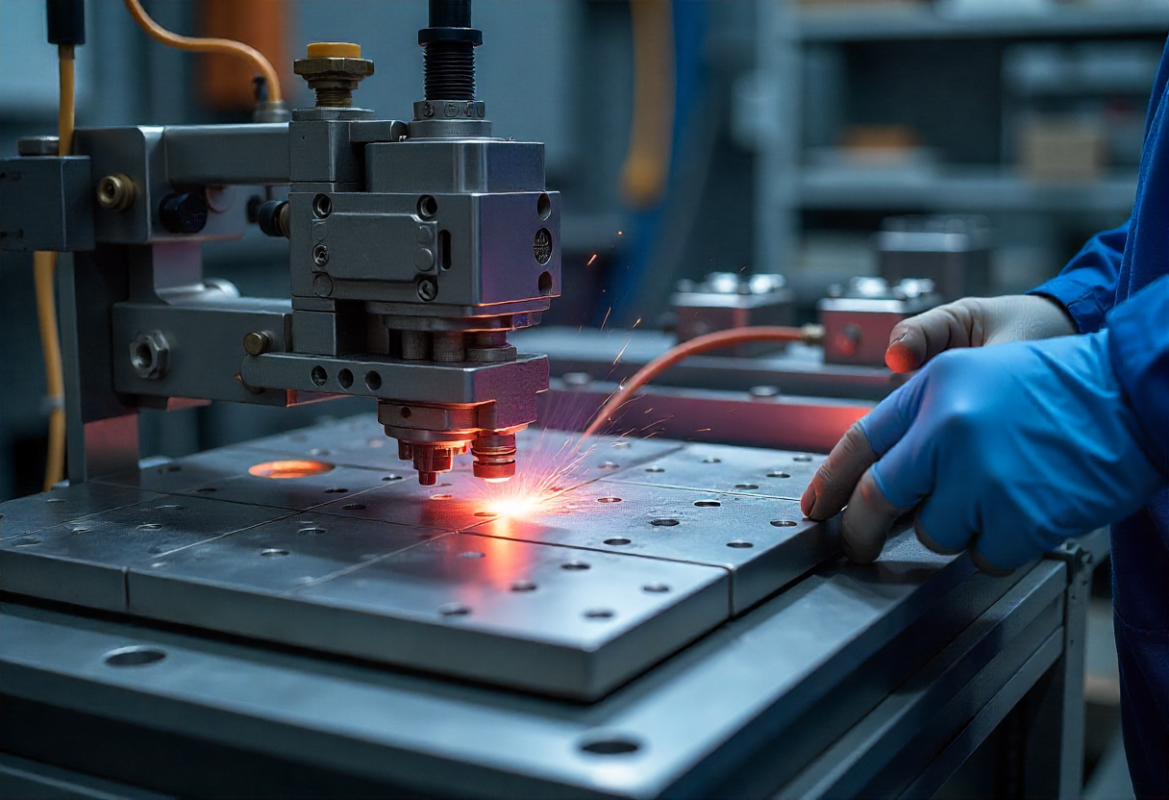
FSW Fixtures — Torque Reaction & Backing

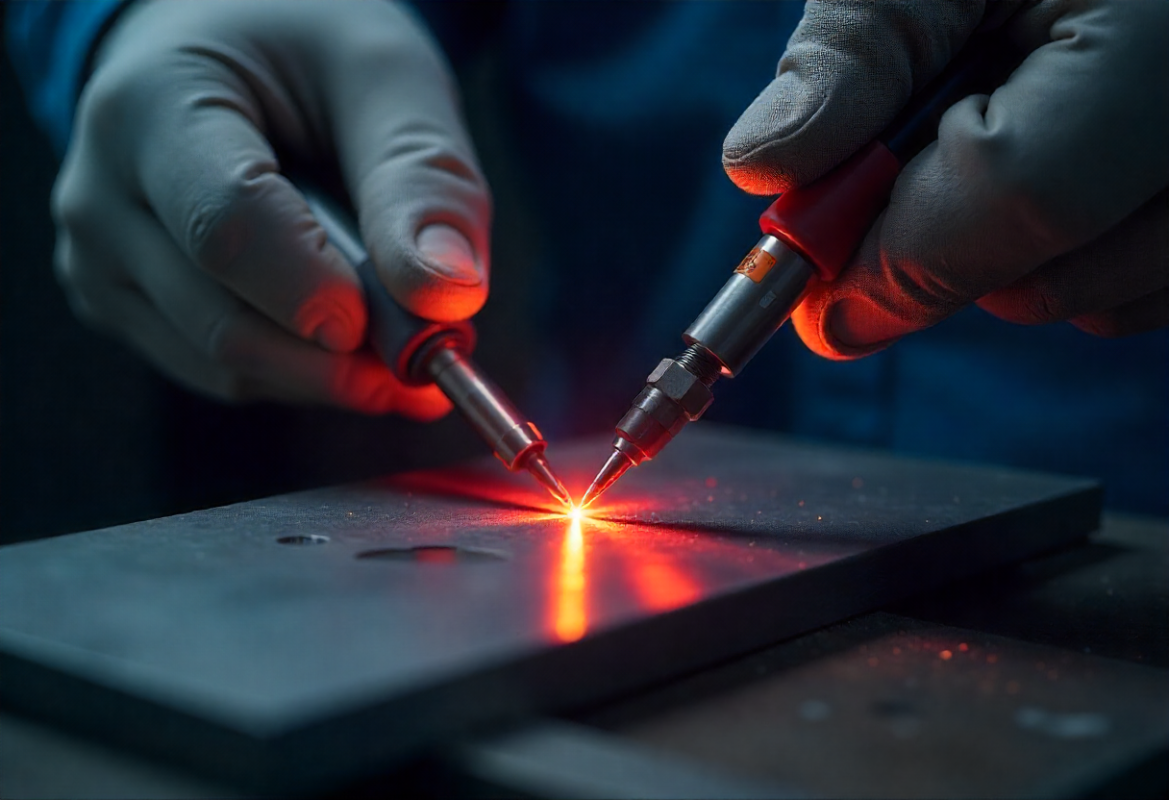
Laser Welding Fixtures — Beam Access & Gas Shroud

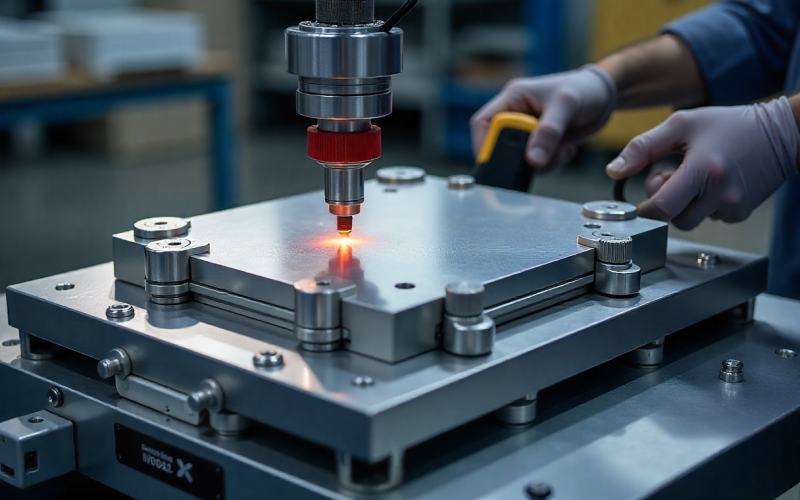
Robotic Cells & Quick‑Change Pallets

Friction Stir Welding (FSW) Fixtures
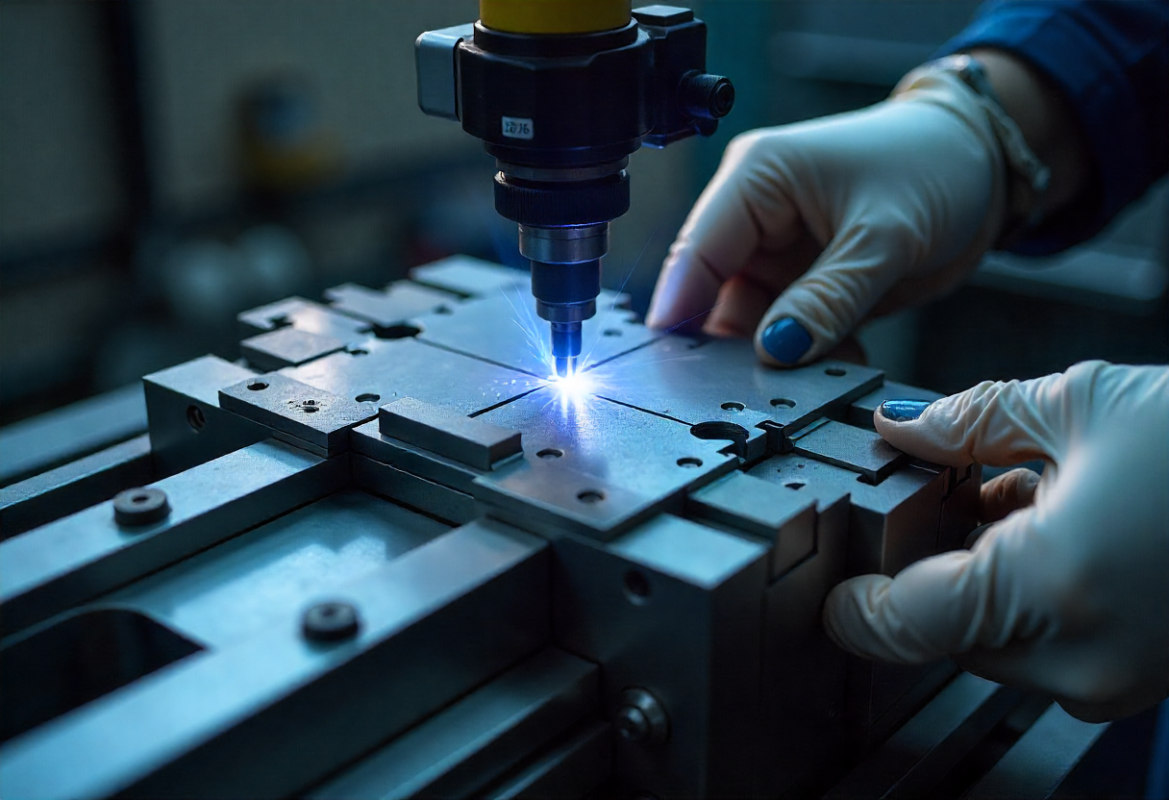
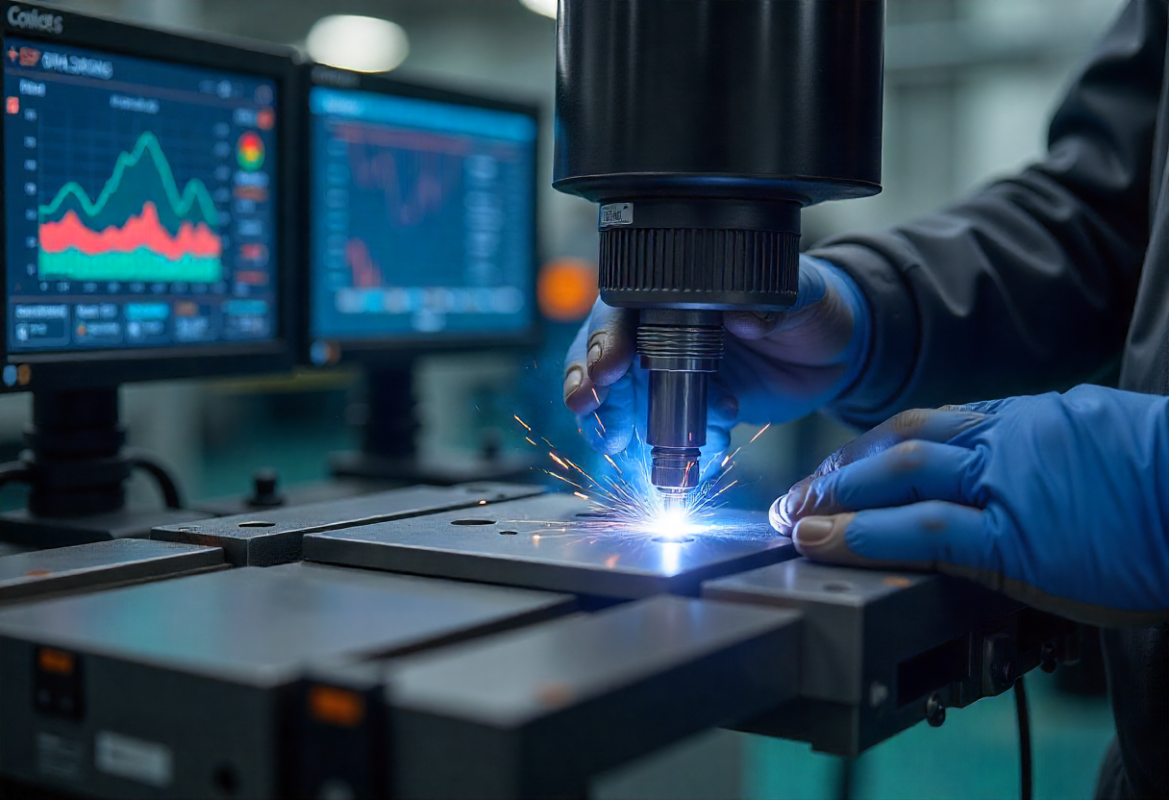
FSW fixtures are built to withstand significant axial and rotational forces while maintaining precise part registration. Key design features include clamping that prevents slippage, robust backing plates (sacrificial or replaceable), Z‑axis positioning, and easy access for tool change and maintenance.
Critical fixture elements

Critical fixture elements

Rigid datum locators and preload clamps to maintain joint gap and surface flatness. Sacrificial backing plates or hardened inserts to protect fixture from tool wear. Z‑axis control with high‑accuracy encoders and force sensors for plunge depth and spindle load feedback. Integrated coolant channels or thermal mass to control heat build‑up near the tool
Process & QC integration

Process & QC integration

We integrate torque / spindle load monitoring, axial force sensing and thermocouples for real‑time process control. Data logging links each weld to part serials and operator IDs for traceability.

Laser Welding Fixtures

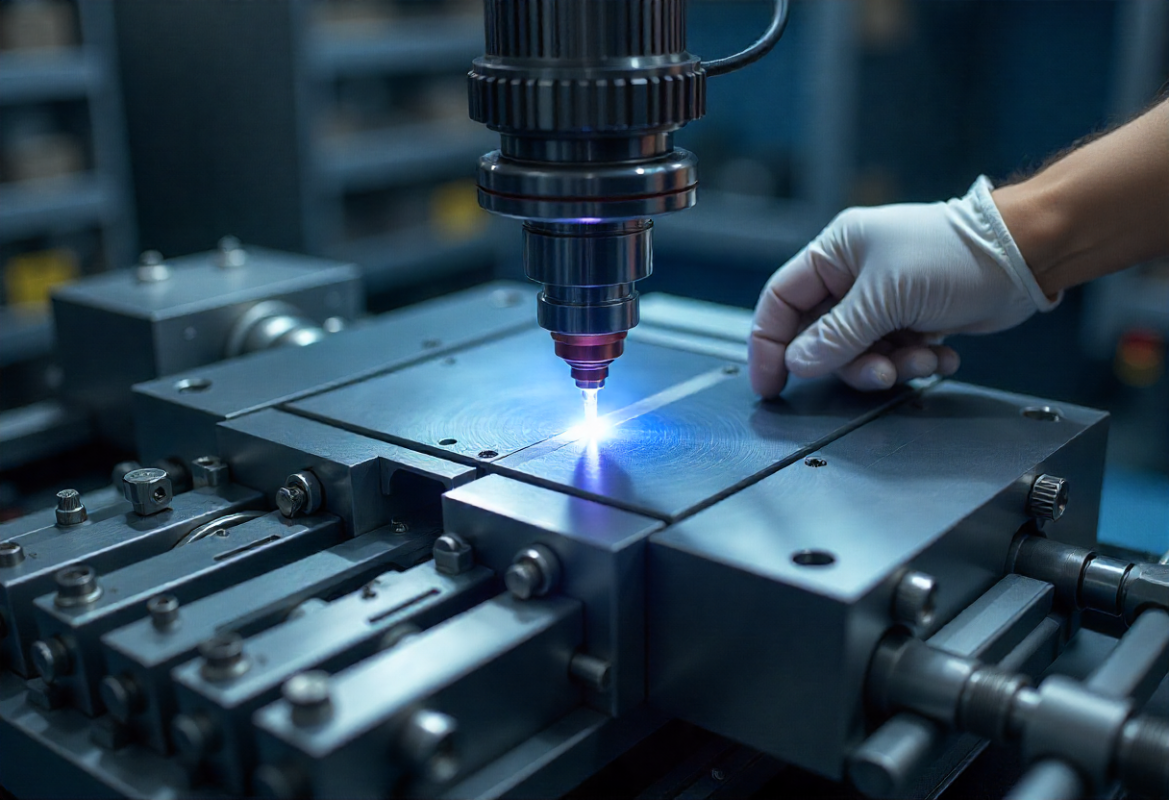
Laser welding fixtures prioritize precise part datums, unobstructed beam paths and gas-shrouding/nozzle integration. Fixtures minimize gap variation and provide active cooling and heat sinking to limit distortion during high‑energy welds.

Key design points

  • Precision locators and fine‑adjustment micro‑clamps to control gap & alignment
  • Beam access windows, mirror/nozzle clearance and fiber‑optic routing provisions
  • Shielding gas manifold integration with adjustable flow to control oxide and porosity
  • Active cooling (water channels or thermal plates) to extract heat from weld zones
Laser Welding Fixtures
Thermal Management & Distortion Control

Thermal Management & Distortion Control

Control of heat is essential for cold‑plate integrity. Fixture strategies include distributed thermal mass, dedicated water cooling channels, staged weld sequences to balance heat input, and pre/post‑weld stabilization. Thermal finite element analysis (FEA) and trial mapping guide fixture cooling design and weld sequencing.

Methods

  • Active water cooling channels in fixture plates and contact pads
  • Thermal spreader plates to distribute heat across a larger mass
  • Staged weld patterns and dwell times to minimize asymmetric heating
  • Pre‑heat or post‑heat as part of process where metallurgical needs dictate

Clamping, Registration & Quick‑Change Pallets

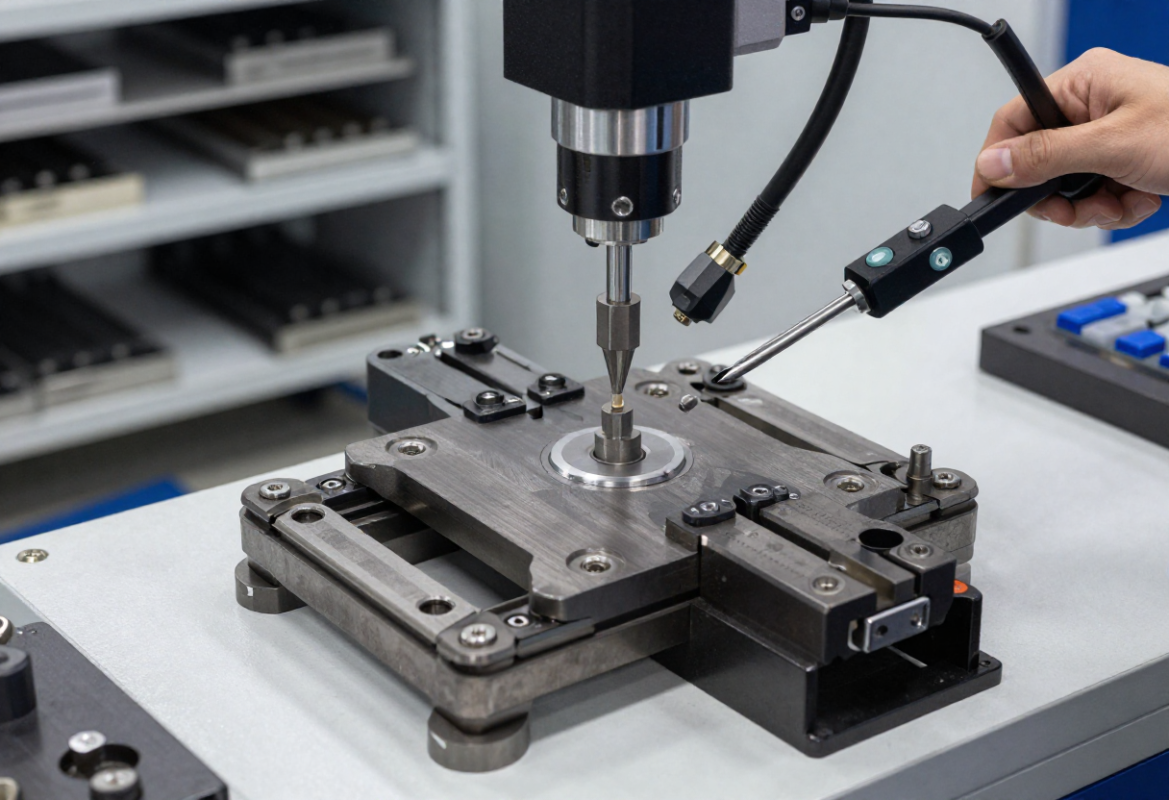
Reliable clamping preserves joint geometry during welding and enables repeatable cycle times. We design kinematic datums, vacuum or mechanical clamps, and quick‑change pallet systems to speed changeovers while ensuring accurate repositioning within microns.

Options

  • Hydraulic or pneumatic clamps with force feedback
  • Mechanical cam clamps for quick engage/disengage in automated cells
  • Precision dowel and tapered pin datums for pallet repeatability
  • Custom soft‑contact pads where surface protection is required
Clamping, Registration & Quick‑Change Pallets

Fixture Materials & Construction

Fixture materials are chosen to balance rigidity, thermal conductivity and wear resistance. Typical choices: hardened steels or tool steels for contact faces, copper or copper‑alloys for thermal spreaders, aluminum for light structural pallets, and replaceable hardened inserts at wear zones.

Hardened tool steel

Wear resistant contact surfaces and clamping faces

Copper alloys

High thermal conductivity for heat extraction

Aluminum tooling bodies

Lightweight pallet structures with machined datum features

Ceramic / composite pads

Where electrical isolation or thermal barrier needed
Sensor Integration & Process Feedback

Sensor Integration & Process Feedback

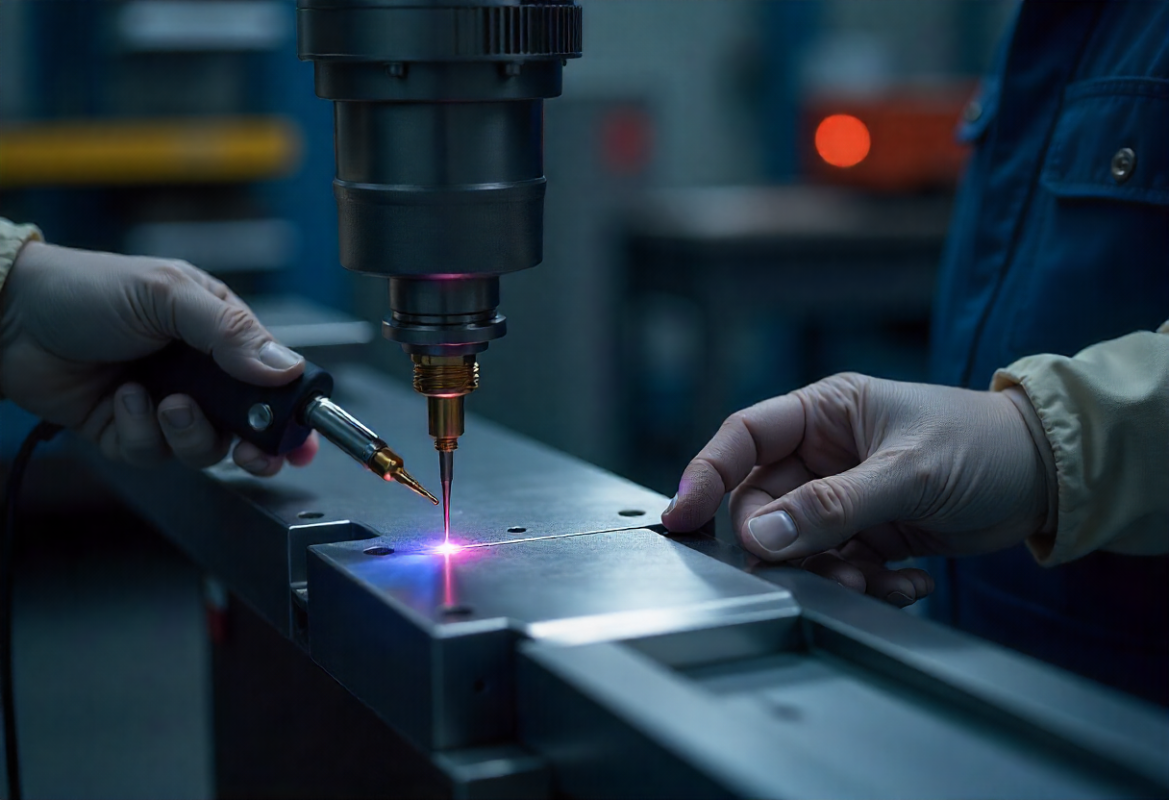
Fixtures routinely include sensors for process control and traceability: thermocouples, IR temperature sensors, force/torque sensors, displacement probes, and fiber optic weld seam monitors. Real‑time data feeds to SPC and MES systems enable automated accept/reject decisions and long‑term process improvement.

Typical sensors

  • Axial force and torque sensors (FSW spindle feedback)
  • Thermocouples and IR pyrometers for weld zone temperature
  • Laser seam trackers and seam finders
  • Contactless displacement sensors for gap monitoring

Robotic Integration & Safety

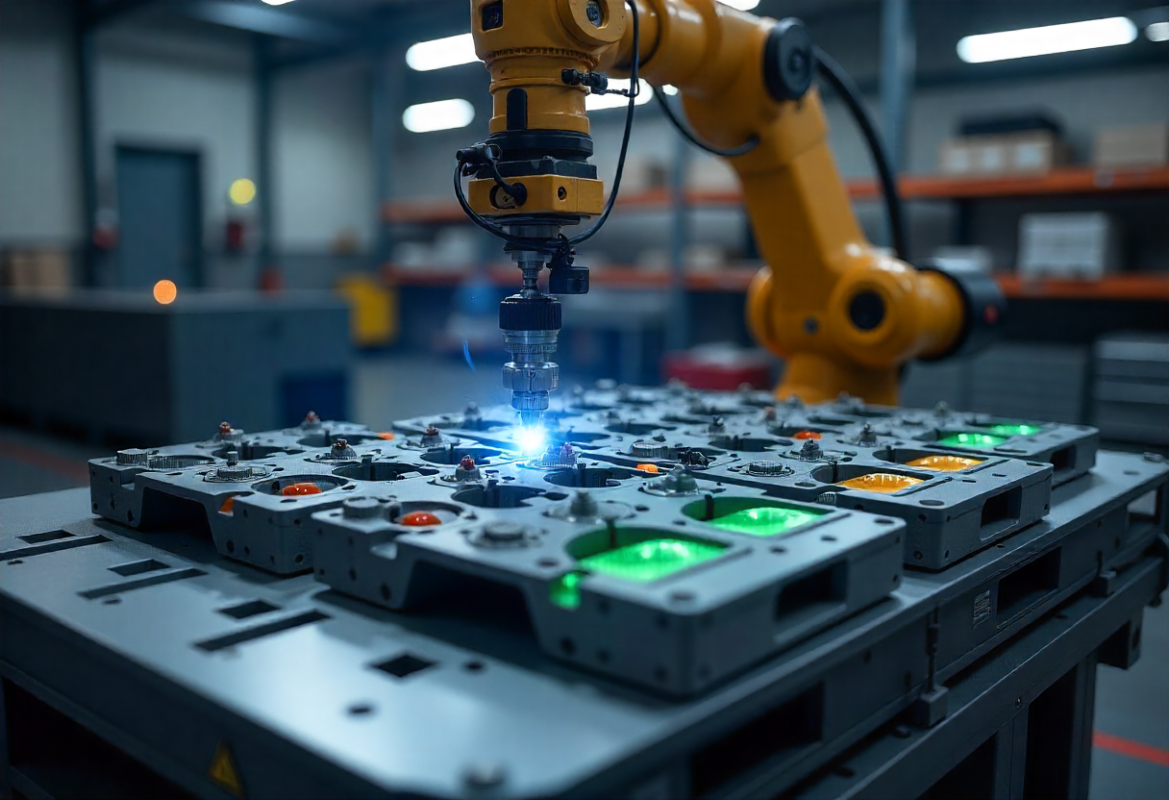
Fixtures are designed for robotic cells with quick‑change pallets, part kitting, vision alignment features and safety interlocks. We provide end‑effector interfaces and collaborate on cell layout, cycle timing and guarded access to meet production throughput and safety standards.

Integration deliverables

  • Pallet and interface drawings for robotic grippers
  • Cycle timing analysis and takt optimization
  • Safety interlocks, light curtains and E‑stop integration
Robotic Integration & Safety
Tryout, Qualification & Quality Gates

Tryout, Qualification & Quality Gates

Fixture tryout includes alignment verification, clamp force validation, weld parameter optimization and distortion measurement. We deliver first article welds, CMM inspection of critical datums, non‑destructive weld evaluation (visual/X‑ray/CT where applicable), and documented process windows for production release.

Tryout deliverables

  • First article weld assemblies with dimensional reports
  • Weld energy/force vs quality mapping and recommended process window
  • Sensor calibration records and control charts
  • Fixture acceptance checklist and maintenance schedule

Maintenance, Spares & Lifecycle Support

We supply recommended PM intervals, spare inserts/backing plates, and refurbishment services for wear zones. For critical lines we offer SLA options for rapid replacement, onsite support during ramp, and tool storage with controlled humidity to prevent corrosion.
Representative Specifications & Tolerances
Item Typical Range / Value Notes
Fixture flatness ≤ 0.05 mm across critical datum Depends on weld seam length and optical requirements
Datum repeatability (pallet) ≤ 0.02–0.05 mm Important for laser seam accuracy
Clamp force Programmable 0—50 kN Hydraulic/pneumatic options with feedback
Cooling capacity Up to 5 kW+ localized Based on weld energy and cycle time

Representative Projects

FSW Fixture for EV Inverter Cold Plate
FSW Fixture for EV Inverter Cold Plate

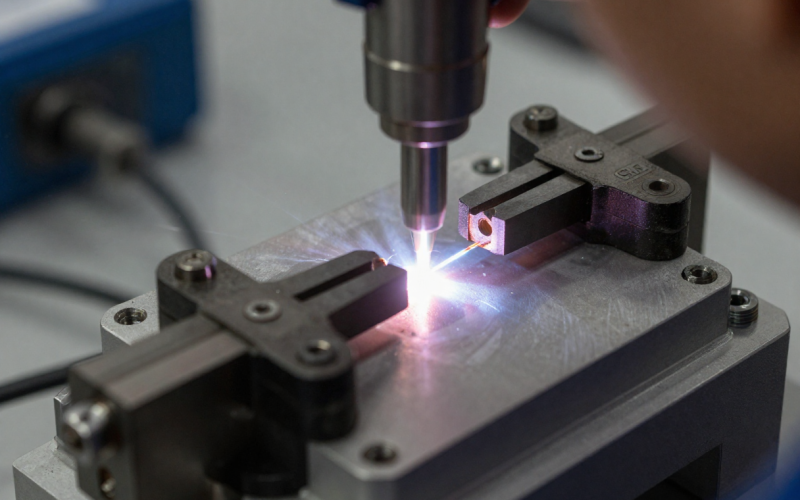
Custom fixture with replaceable backing inserts, force/torque sensing, active water cooling and quick‑change pallet. Enabled automated single‑sided FSW with <0.1 mm flatness across sealing faces and documented Cpk improvements on joint quality.
Laser Weld Cell for Cold Plate Seam

Laser Weld Cell for Cold Plate Seam

Fixture with precision dowel datums, micro‑clamps, gas shroud manifold and IR temperature monitoring. Achieved leak‑tight seams with minimal post‑machining and integrated MES traceability for each unit.

Frequently Asked Questions

Which welding method is better for cold plates — FSW or laser?
FSW is excellent for high‑integrity, low‑porosity joints in aluminum with minimal melt‑zone metallurgy; good for thick sections. Laser welding is faster for thin seams, offers narrow HAZ and minimal distortion when well controlled. Choice depends on geometry, material thickness, leak requirements and throughput.
We design modular fixtures with replaceable inserts, adjustable locators and pallet families. Quick‑change tooling reduces changeover time and enables single cell support for multiple variants.
Yes — we support fixture installation, process qualification, on‑site commissioning, train operators and provide run‑rates, maintenance procedures and troubleshooting support during ramp.
We perform helium leak tests, pressure decay, vacuum, and where applicable CT/X‑ray inspection. Acceptance criteria are defined by functional requirements and industry standards; test reports are delivered with each lot.

Start Your Welding Fixture Project

Upload your cold plate CAD, seam path, material(s) and target throughput. We’ll return a fixturing recommendation, estimated lead time and a proposal for sensor/automation integration — typically within 24 business hours.
We make it fast, easy, and risk-free to get started.
Get Free Quote in 30 Minutes

All uploads are secure and confidential

Samples in 1 day, $50-200 fee refunded on 100+ units
Get a Quote in 30 Minutes
All uploads are secure and confidential.