Vapor Smoothing 3D Printed Parts

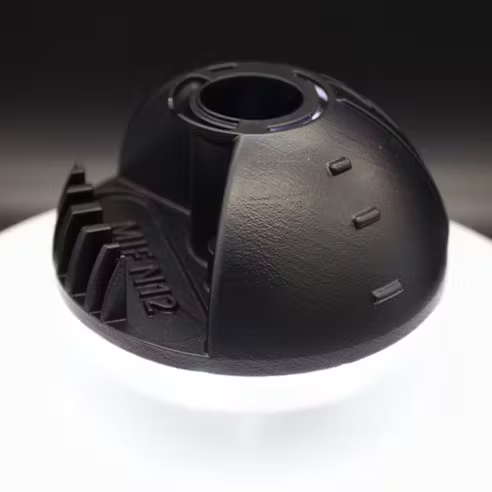
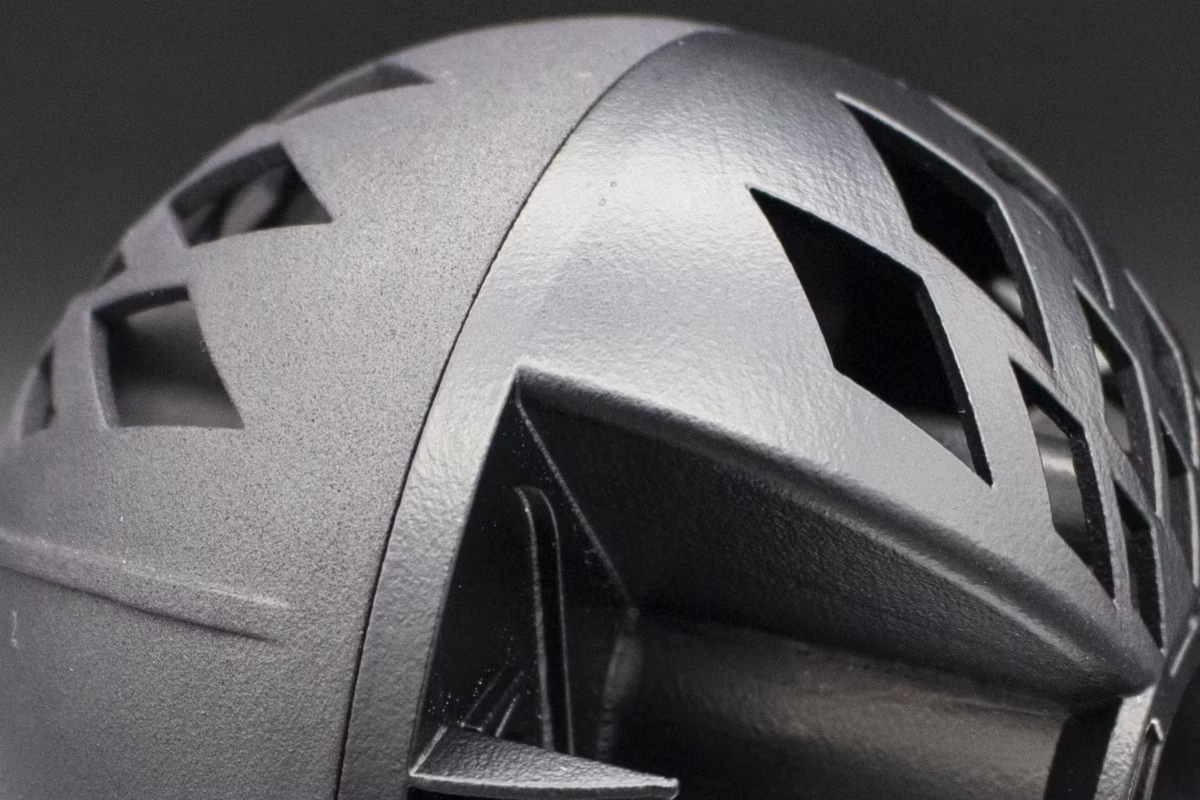
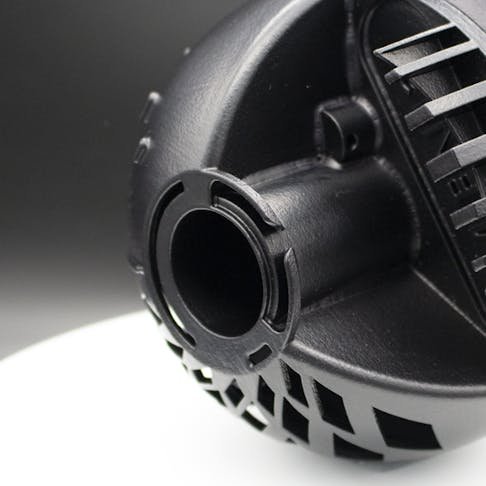
LK Tools’ vapor smoothing finish improves the surface quality of additively manufactured parts reducing roughness and sealing the surface for a more production-ready look and feel.

(Replace “rivals injection molding” with “more production-ready” to avoid overclaiming; you can keep the stronger claim if you want.)

Start A New 3D Printing Quote

STEP | STP | SLDPRT | STL | DXF | IPT | 3MF | 3DXML | PRT | SAT files

All uploads are secure and confidential.

 Xometry’s Instant Quoting Engine is covered by U.S. Pat. Nos. 11,086,292, 11,347,201, 11,693,388, 11,698,623, 12,099,341, and 12,189,361. Other patents pending.

New!

Vapor Smoothing 3D Printed Parts

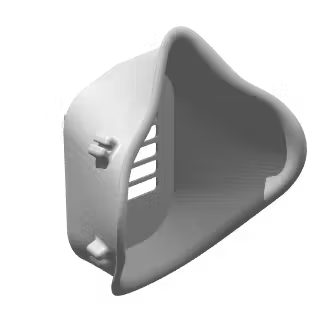
3D printing is a great fit for low-volume production and rapid iteration, but many polymer print processes produce a visibly textured surface. Powder bed fusion processes like SLS and HP Multi Jet Fusion (MJF) often have a matte, granular finish. FDM commonly shows layer lines. Traditional post-processing (tumbling, hand finishing, coatings) can help, but it may not fully seal the surface or deliver consistent cosmetic results on complex geometry.

Chemical vapor smoothing is an effective finishing option when cosmetics and a sealed surface are priorities. It can make polymer prints more suitable for end-use applications by improving appearance, reducing surface roughness, and enhancing cleanability characteristics (material and application dependent).

What Is Chemical Vapor Smoothing?

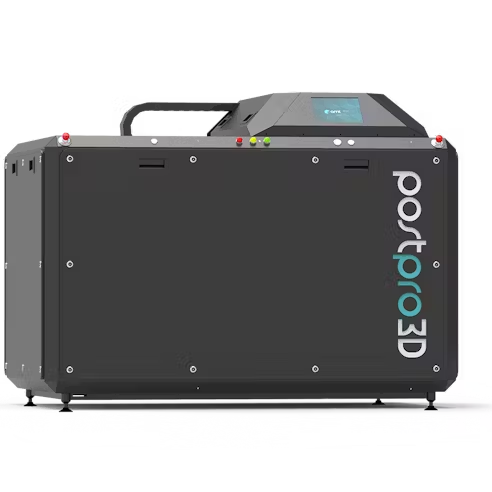
Chemical vapor smoothing is a controlled process that uses vaporized finishing chemistry in a sealed chamber to gently reflow the outermost surface layer of the printed part. Unlike sanding or blasting, vapor smoothing does not “cut” the surface with abrasives. Instead, it softens the microscopic peaks and redistributes material to reduce roughness and create a more uniform finish.

Typical workflow:

  • Parts are racked or positioned to expose surfaces consistently
  • A controlled vapor cycle is run based on material and geometry
  • The chamber is cleared and parts are returned in a dry, finished state
  • Parts may then proceed to secondary finishing (such as dyeing) if required

Exact chemistry and process parameters vary by system and material.

What 3D Printed Materials Can Be Vapor Smoothed?

Vapor smoothing is compatible with many polymer 3D printing materials, especially common SLS and MJF nylons (material-dependent). If you’re unsure whether your material is compatible, upload your files and specify your print process and material so we can confirm feasibility.

Common compatible families (examples, project-dependent):

  • Nylon (PA12 / PA11 families)
  • Certain filled nylons (review required)
  • Some elastomers (review required)

(If you provide your exact supported material list, I’ll convert this into a clean table.)

How Much Does Vapor Smoothing Cost?

Vapor smoothing cost depends on:

  • material and print process
  • part size and geometry
  • quantity (batch finishing economics)
  • masking/racking complexity
  • any additional finishing (dyeing, polishing, etc.)

Because the process is often performed in batches, per-part finishing cost can decrease with higher quantities. If your timeline is tight, include your target date in the quote notes so we can advise on the best path.

The Benefits of Vapor Smoothed 3D Prints

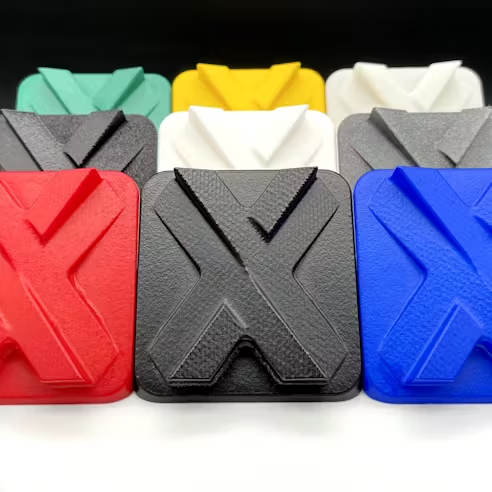
Vapor smoothing improves the surface condition of polymer prints by sealing and evening the exterior, which can enhance appearance and reduce the “powdery” feel common to some print processes.

Common benefits include:

  • More uniform, sealed surface on polymer prints
  • Improved cosmetics and a more consistent look
  • Reduced surface roughness (exact results vary by material and geometry)
  • No added coating layer—the surface remains the base material
  • Reduced moisture absorption tendency (material dependent)
  • Repeatable, controlled finishing cycle
  • Ability to finish non-line-of-sight features better than many mechanical methods
  • Reduced risk of media entrapment compared to some abrasive processes
  • Improved dye/finish consistency for some materials (project-dependent)

Important note: vapor smoothing improves surface uniformity but does not necessarily create a mirror-polished surface. Subtle topology or faint build artifacts may still be visible depending on the process and geometry.

Chemical Vapor Smoothing for Health and Safety Products

Vapor smoothing can support applications where a sealed, easier-to-clean surface is valuable. If your program has regulated requirements (food contact, skin contact, medical use, etc.), share the exact standard or compliance target so we can confirm feasibility and any required documentation.

(Only include specific “passes biocompatibility tests” statements if you have the exact test standards and supporting documentation you want to cite.)

Design Tips for Vapor Smoothing 3D Prints

  • Add radii to sharp internal corners to reduce stress and improve finish consistency
  • Keep wall/features above 0.040″ (1.0 mm) when possible to reduce distortion risk (geometry dependent)
  • Keep wall thickness more uniform where possible
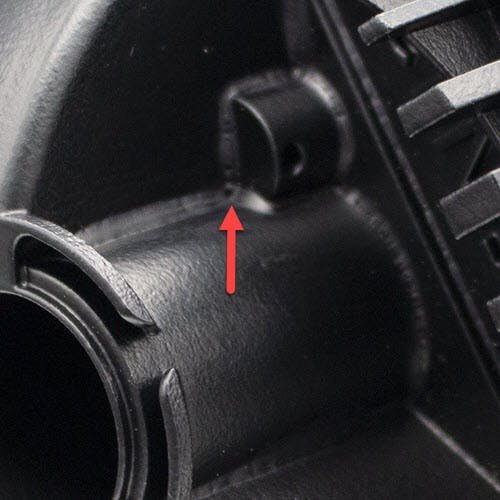
  • Orientation-specific build lines may still be faintly visible after smoothing
  • Racking/fixture contact marks may be visible depending on how parts are held
  • Flexible materials may show more surface variation than rigid materials
  • If tight fits matter, plan for finishing impact and identify critical dimensions on a drawing

On-demand Webinar: Everything You Need to Know about Vapor Smoothing 3D Prints

Join experts for a practical overview of vapor smoothing, design tips, and production considerations.

Understanding and Preventing Vapor Smoothing Defects

Common defect types and how to reduce risk through design and build strategy.

Applications for Vapor Smoothing

Concept Models

Improved cosmetics and a sealed surface make parts better suited for demos, samples, and customer-facing reviews.
Rapid Prototyping

A strong option for prototypes that need a more finished look without switching away from additive manufacturing.
Direct Digital Manufacturing

Batch finishing can support larger quantities of customized parts when the design is validated (project-dependent).

Get Started on Your 3D Printing Quote

Free shipping available for domestic 3D printing orders ; learn more!

Why Choose LK Tools For 3D Printing Services?

Endless Options

Choose from millions of possible combinations of materials, finishes, tolerances, markings, and certifications for your order.

Easy to Use

Get your parts delivered right to your door without the hassle of sourcing, project management, logistics, or shipping.

Vetted Network

We are ISO 9001:2015, ISO 13485, and AS9100D certified. Only the top shops that apply to become Suppliers make it through our qualification process.

We make it fast, easy, and risk-free to get started.
Get Free Quote in 30 Minutes

All uploads are secure and confidential

Samples in 1 day, $50-200 fee refunded on 100+ units
Get a Quote in 30 Minutes
All uploads are secure and confidential.