
Surface Grinding Service

Surface grinding for flatness, thickness control, and smooth surface finishes on metal and select plastics. Service availability depends on material, geometry, and inspection requirements.

Start A New Surface Grinding Quote

All uploads are secure and confidential.

 Xometry’s Instant Quoting Engine is covered by U.S. Pat. Nos. 11,086,292, 11,347,201, 11,693,388, 11,698,623, 12,099,341, and 12,189,361. Other patents pending.

What Is Surface Grinding?

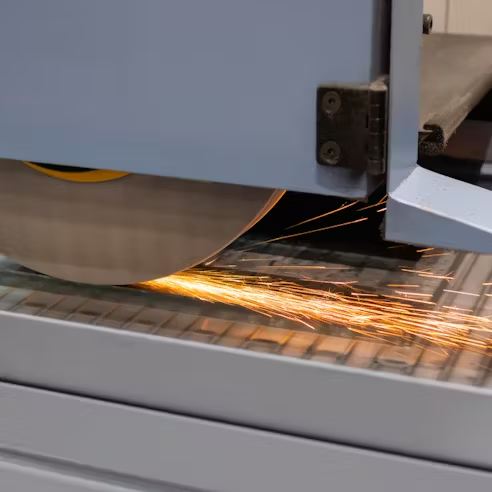
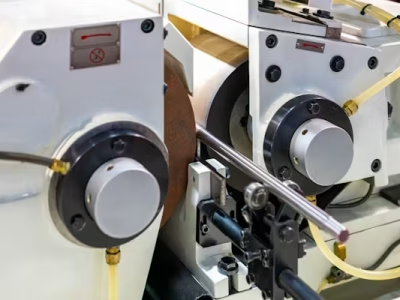
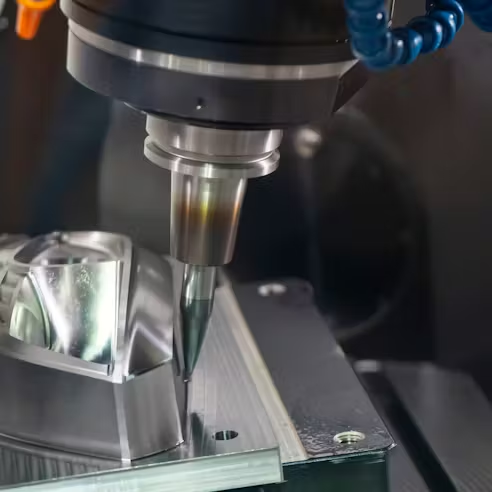
Surface grinding is a precision finishing process used to produce flat, smooth, and dimensionally accurate surfaces. A rotating abrasive wheel removes small amounts of material while the part is held securely on a table (often via magnetic chuck for ferrous materials). Surface grinding is commonly used to control flatnessparallelism, and final thickness, or to create a uniform finish on critical faces.

Surface grinding is often selected after machining or heat treatment when parts need final size correction, improved surface finish, or consistent mating surfaces.

Types of Materials for Surface Grinding

Listed below are some of the materials that accept surface grinding:

  • Aluminum​
  • Brass​
  • Cast Iron​
  • Mild Steel​
  • Stainless Steel​
  • Plastic​
  • Titanium​

Aluminum

Useful for flatness and thickness control when set up correctly. May require attention to wheel selection and fixturing due to material loading.

Brass

Can be ground for flatness and surface finish; wheel selection and feeds help avoid smearing.

Cast Iron

Commonly ground and generally stable; suitable for flat reference surfaces and mating faces.

Mild Steel

A frequent surface grinding material—often for tooling plates, brackets, and machine components.

Stainless Steel

Grindable, but can require careful process control due to heat and work hardening (grade dependent).

Plastic

Some engineering plastics can be surface ground for thickness/flatness requirements with appropriate technique.

Titanium

Possible with correct abrasives and process controls; typically requires careful heat management.

Advantages of Surface Grinding

Surface grinding offers several benefits across the manufacturing sector:

  • Environment-Friendly​
  • High Accuracy​
  • Smooth Finish​
  • Tight Tolerances​

Environment-Friendly

Surface grinding removes small amounts of material and can be an efficient finishing step when compared with repeated machining passes (setup dependent).

High Accuracy

Surface grinding is commonly used for final correction of thickness, flatness, and parallelism on critical faces.

Smooth Finish

Produces consistent surface finishes suitable for mating surfaces, sliding interfaces, and cosmetic faces (requirement dependent).

Tight Tolerances

Surface grinding can help achieve tight dimensional control when the part is designed and fixtured appropriately. Include your tolerance targets and inspection requirements in the RFQ.

In need of custom surface grinding services?

Drawbacks Of Surface Grinding

Listed below are some of the disadvantages of surface grinding:

  • Costly​
  • Surface Contaminants​
  • Local Heat Effects​

Costly

Surface grinding equipment is very precise and therefore costly.

Surface Contaminants

Residual abrasives embedded in the surface can disrupt the formation of a protective oxide film in stainless steel. This can invite corrosion when equipment is exposed to aggressive environments. These residual contaminants make surface grinding unacceptable as a finishing process for pharmaceutical processing equipment, among other sectors. 

Local Heat Effects

Poor coolant supply and/or excessive cut depth can heat the workpiece enough to disrupt previous hardening effects. In the case of slides and plane bearings, that will compromise their resiliency.

Other Grinding Capabilities

a952e75b-437c-4ecc-9a6a-99c8867ba23e_blanchard-ground-part
Precision Grinding Services
Tight-tolerance grinding options for round parts, IDs/ODs, and precision geometries (project-dependent).
240f98b4-d271-4f70-b34d-ad0458fb7b67_centerless-grinding-machine
Centerless Grinding Services
High-throughput OD grinding for cylindrical parts where volume and consistency matter.

Alternatives to Surface Grinding

If surface grinding isn’t the best fit, alternatives may include:

  • Milling for general flatness requirements and faster stock removal
  • Lapping for extremely fine finishes or tight flatness (project-dependent)
  • Honing for bore-related geometry and internal surfaces
  • Reaming for precision sizing of holes (internal only)

Why Choose LK Tools For Surface Grinding Services?

Endless Options

Choose from millions of possible combinations of materials, finishes, tolerances, markings, and certifications for your order.

Easy to Use

Get started with our easy-to-use platform and let our experts take care of managing the project from locating the right manufacturing partner to delivery logistics.

Vetted Network

We are ISO 9001:2015, ISO 13485, and AS9100D certified. Only the top shops that apply to become Suppliers make it through our qualification process.

Ready to use Our surface grinding service?

We make it fast, easy, and risk-free to get started.
Get Free Quote in 30 Minutes

All uploads are secure and confidential

Samples in 1 day, $50-200 fee refunded on 100+ units
Get a Quote in 30 Minutes
All uploads are secure and confidential.