Metal Extrusion Services

High-quality, cost-effective metal extrusions for repeat production programs.

Start Your Metal Extrusion Quote

STEP | STP | SLDPRT | IPT | PRT | SAT files

All uploads are secure and confidential.

 Xometry’s Instant Quoting Engine is covered by U.S. Pat. Nos. 11,086,292, 11,347,201, 11,693,388, 11,698,623, 12,099,341, and 12,189,361. Other patents pending.

The Extrusion Process

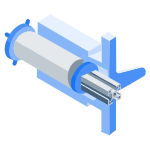
Metal extrusion is commonly used to produce high volumes of material with a constant cross‑section. In extrusion, a heated (or sometimes room-temperature) billet is forced through a die opening under high pressure, producing a continuous profile that matches the die shape.

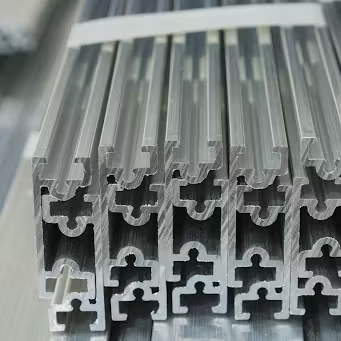
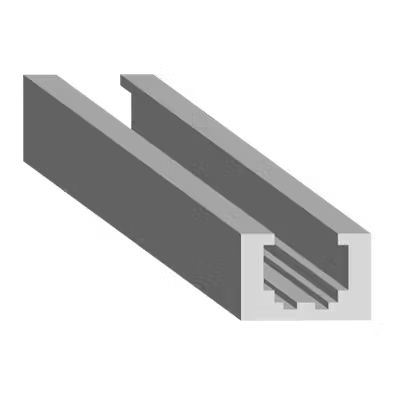
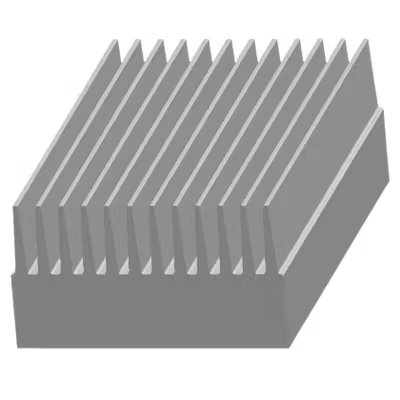
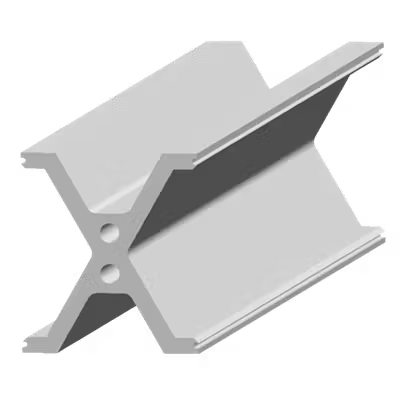
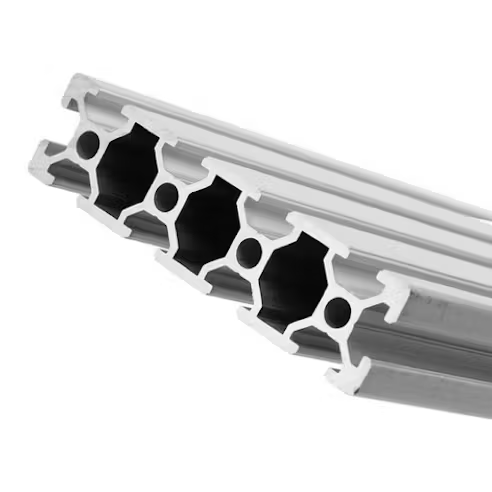
Extruded profiles can be simple—such as round or rectangular tubing, angles, and channels—or more complex shapes with internal hollows and external features, including T‑slot framing and heat sink profiles. After the profile exits the die, it is typically quenched or cooled, straightened, cut to length, and inspected. Secondary operations such as drilling, tapping, machining, and finishing can add features that are not part of the constant cross-section.

Extrusions may be solid or hollow. Hollow profiles often require specialized die design (such as multi-part tooling with mandrels) to form internal cavities. The overall size of the profile is limited by the press capacity, often described by the smallest circle that can fully enclose the profile (circumscribed circle).

Aluminum is the most common extruded metal due to its ductility, corrosion resistance, and broad finishing options. LK Tools can help you evaluate whether extrusion is the right fit and recommend a practical profile, alloy, temper, and post-processing plan.

Metal Extrusion With LK Tools

Start A Quote

Upload your CAD and drawings with key details: profile geometry, alloy/temper (if known), finish requirements, cut lengths, and expected volume. We’ll review feasibility and confirm any DFM recommendations.
Sample Approval

We build an extrusion die and run initial samples for dimensional and functional review. Adjustments can be made based on measurement results and fit testing.

Production Begins

After approval, we proceed with repeat production and deliver parts according to your schedule. Reorders are supported once the profile is validated.
NEW!

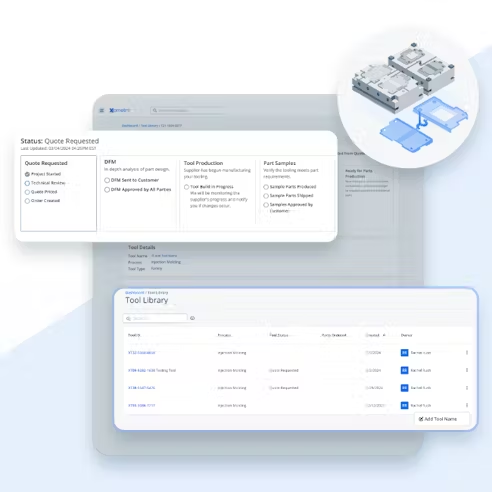
Built-In Tool Management

For ongoing extrusion programs, revision control helps keep supply consistent—especially if you expect multiple lengths, iterative profile tweaks, or scheduled releases. If you need tooling revision tracking or structured approvals, tell us during quoting so we can align the workflow.

Benefits (bullets):

  • Better organization for tooling revisions and releases
  • Clear visibility into sampling and production status
  • Easier coordination for approvals and changes
  • Improved transparency across project phases

(Only keep this section if you actually provide a formal tool-management workflow.)

Types of Extrusion and Extrusion Profiles

LK Tools supports common extrusion methods and a wide variety of profile shapes. The best approach depends on alloy, profile complexity, and target tolerances.

Types of Extrusion

Direct Extrusion

In direct extrusion, a ram pushes the billet through a stationary die. This is one of the most common methods and supports a broad range of profile designs.

Considerations: friction between billet and container can increase heat and affect consistency; process controls and die design help manage this.

Indirect Extrusion

In indirect extrusion, the die moves toward the billet and the material flows opposite the ram direction. Because there is less relative motion between billet and container, friction is reduced.

Considerations: die size is constrained by the hollow ram; surface impurities can affect finish if not controlled.

Hot, Warm, and Cold Extrusion

These are temperature categories that can be applied to either primary method:

  • Hot extrusion: billet heated above recrystallization temperature (common for many aluminum extrusions).
  • Warm extrusion: elevated temperature but below recrystallization.
  • Cold extrusion: near room temperature (often increases hardness/strength but can increase tooling wear).

Extrusion Profiles

If you want to post-machine off-the-shelf profiles, LK Tools can also support machining and secondary processing.

Common profile families include:

  • T‑slot aluminum extrusions
  • Aluminum angles
  • T‑bars / H‑bars / Z‑bars
  • I‑beams
  • U‑channels
  • Hat channels
  • Rectangular tubes
  • Round tubes and pipe

Aluminum Extrusions

Aluminum is widely used for extrusions due to its ductility, corrosion resistance, strength-to-weight ratio, and finishing options. Alloy choice affects strength, corrosion performance, machinability, and anodizing response.

If you have a specific alloy/temper requirement, include it in your RFQ. If not, share your application (structural vs cosmetic, indoor/outdoor, load/temperature exposure) and we can recommend options.

Other Metals (project-dependent)

If you need stainless steel or another metal extrusion, include it as a custom request so we can review feasibility and sourcing.

(If you have a real “alloys comparison table,” paste it and I’ll rewrite it cleanly for LK Tools.)

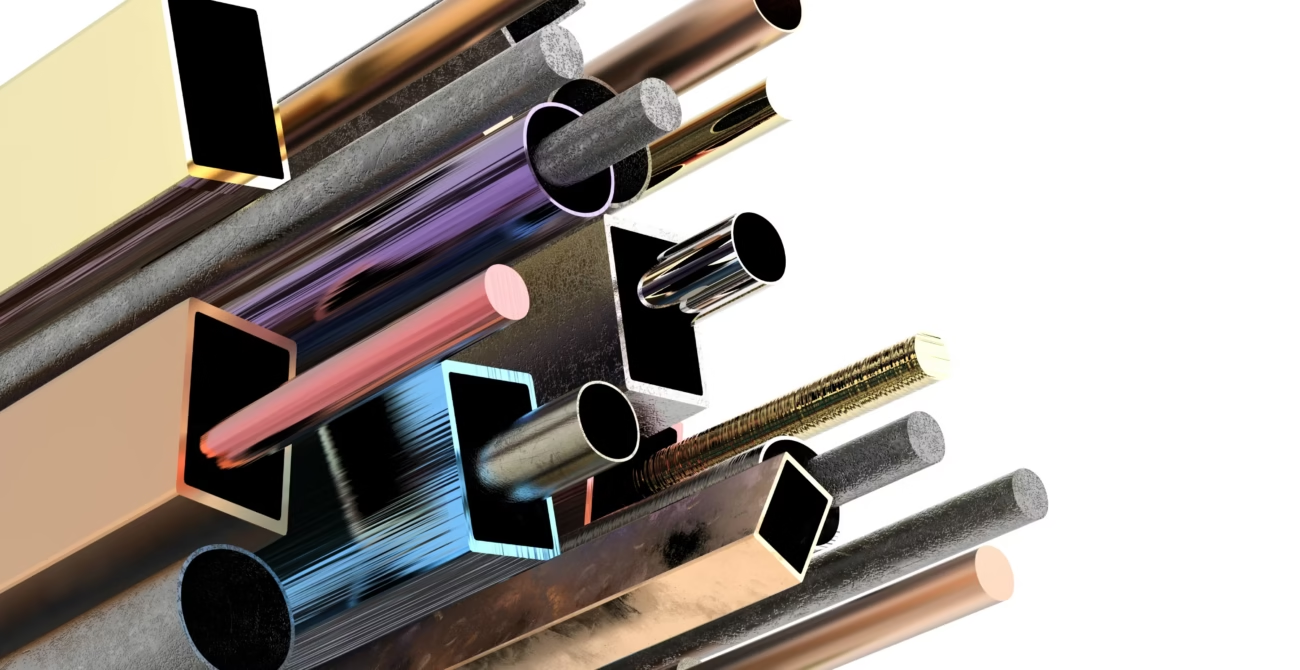
Array of metal extrusions with different finishes

Available Extruded Part Finishes

As-Extruded

Surface remains as produced. Roughness and visible grain lines can vary by alloy and process.

Anodized (Type II Or Type III)

Type II improves corrosion resistance and offers color options; Type III is thicker and more wear resistant. (Anodizing is typically for aluminum; availability depends on alloy and requirements.)

Powder Coating

Durable coating with many colors and textures; good for corrosion resistance and cosmetics.

Wet Painting

Wide range of paint systems and color matching options (specify color requirements in notes or drawings).

Plating

Plating options vary by base material and requirements.

Chemical Film

Helps corrosion resistance and paint adhesion while retaining electrical conductivity (commonly for aluminum).

Media Tumbled

Deburr and smooth edges via vibratory tumbling (best for smaller parts).

Custom

Request a specific finish if you don’t see what you need.

Ready to get started on your extrusion quote?

Applications of Extrusion

Metal extrusions are used across architecture, construction, transportation, industrial equipment, electronics, and more. Extrusion is often the most practical way to create continuous profiles at scale—especially when the cross-section includes channels, grooves, or thin-wall features.

Common applications:

  • Aircraft and transportation structural components (project-dependent)
  • Window/door frames, trim, architectural profiles
  • Electrical housings and connector components
  • Conveyors and machine frames
  • Ladders, rails, scaffolding components
  • Thin-wall enclosures and channels
  • Heat sinks and thermal management profiles

Metal Extrusion Advantages and Disadvantages

Advantages of Metal Extrusion

Dimensional Accuracy and Stability

Modern presses can produce consistent profiles when the die and process controls are validated.

Low Part Cost

Continuous production and efficient material usage make extrusion economical for repeat programs.

Lower Tooling Cost

Tooling is often simpler than molding or casting tooling (project-dependent).

Cross-Section Complexity

Extrusion supports grooves, channels, internal hollows, and profile features that remain constant along the length.

Disadvantages Of Metal Extrusion

Initial Setup Cost

Die build, sampling, and setup create upfront cost before production.

Design Limitations

The cross-section must remain constant; features like pockets, bosses, and countersinks require secondary machining.

Lead Times

Die build and iteration can take weeks depending on complexity and revision cycles.

Why Choose LK Tools For Extrusion Services?

Endless Options

Choose from millions of possible combinations of materials, finishes, tolerances, markings, and certifications for your order.

Easy to Use

Get started with our easy-to-use platform and let our experts take care of managing the project from locating the right manufacturing partner to delivery logistics.

Vetted Network

We are ISO 9001:2015, ISO 13485, and AS9100D certified. Only the top shops that apply to become suppliers make it through our qualification process.

We make it fast, easy, and risk-free to get started.
Get Free Quote in 30 Minutes

All uploads are secure and confidential

Samples in 1 day, $50-200 fee refunded on 100+ units
Get a Quote in 30 Minutes
All uploads are secure and confidential.