
Sheet Metal — Stamping, Deep Draw, Progressive Tooling & Metal Spinning
Comprehensive sheet metal manufacturing for housings, structural brackets, reflectors and mechanical enclosures. We provide progressive & transfer stamping, deep draw tooling, spinning, die design, strip layout, tryout and finishing — from prototype to high‑volume production with ongoing tool life support.
- Progressive and transfer dies, deep draw sequences, and CNC spinning for axisymmetric parts
- Strip layout optimization, in‑die secondary operations and die life / spare insert strategies
- Tryout, FAI/PPAP, NDT for critical parts and finishing for cosmetic/functional needs
Progressive Stamping
Deep Draw Forming
Metal Spinning & Flow Forming
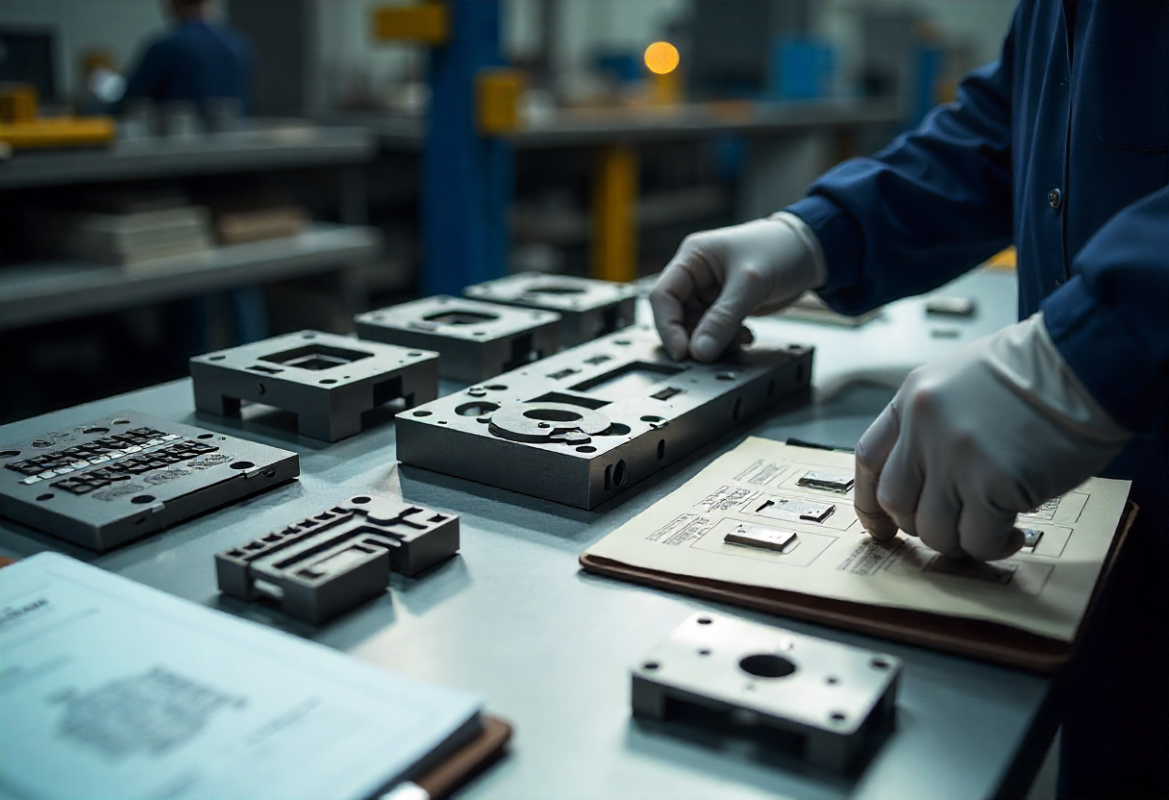
Progressive & Transfer Stamping Tooling
Progressive and transfer tooling deliver efficient high‑volume production of multi‑feature parts. We engineer strip layout, station sequencing, in‑die secondary operations and die steels/coatings to meet annual volume and die life requirements.
Engineering focus
- Strip & nest optimization for material utilization and scrap reduction
- Station sequencing to balance forming loads and reduce springback
- In‑die tapping, clinching and in‑die welding to reduce assembly cost
- Die maintenance plan with spare insert strategy for critical wear stations
Deep Draw Forming
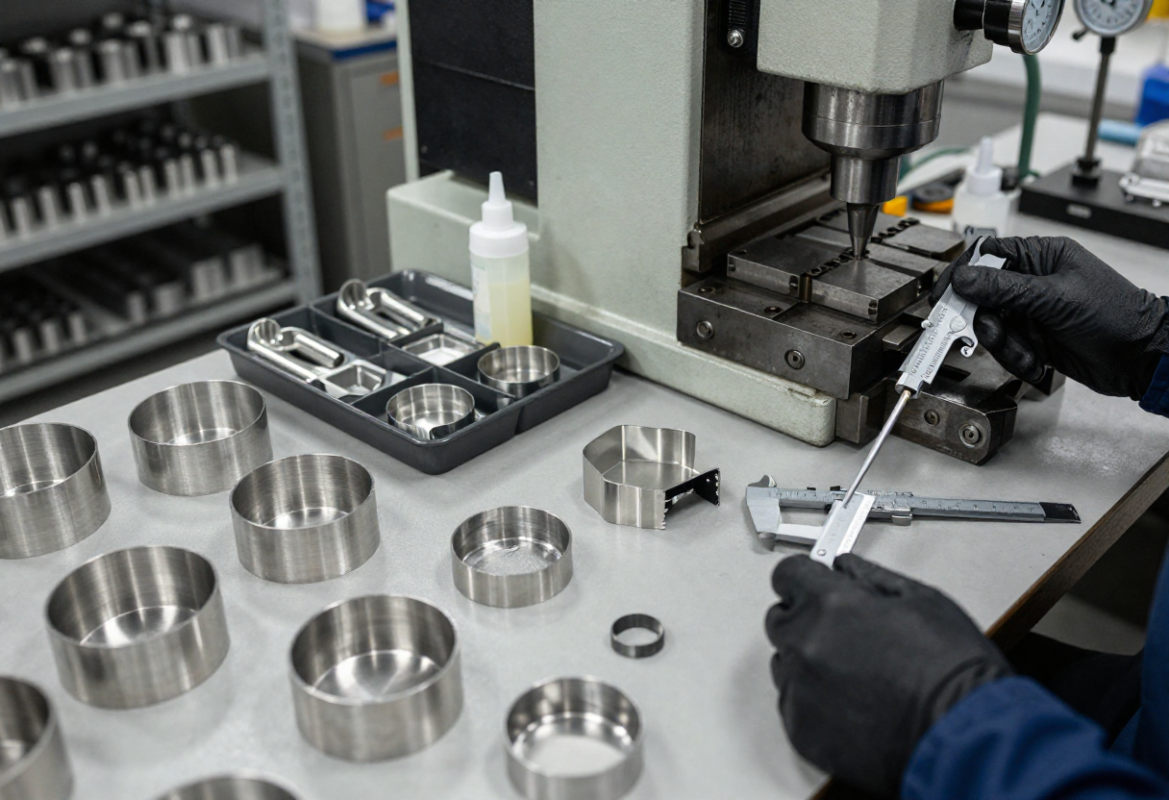
Deep draw forms seamless, high‑integrity parts from flat blanks through staged draws. We engineer punch/die radii, blank holder pressures, lubrication and intermediate anneal steps for stainless and high strength steels to control wall thinning and avoid wrinkling or tearing.
Typical applications
- Seamless housings, cups, reflectors and large domes
- High cosmetic parts for lighting and consumer applications
- Parts requiring leak‑tight or pressure resistant geometry
Metal Spinning & Flow Forming
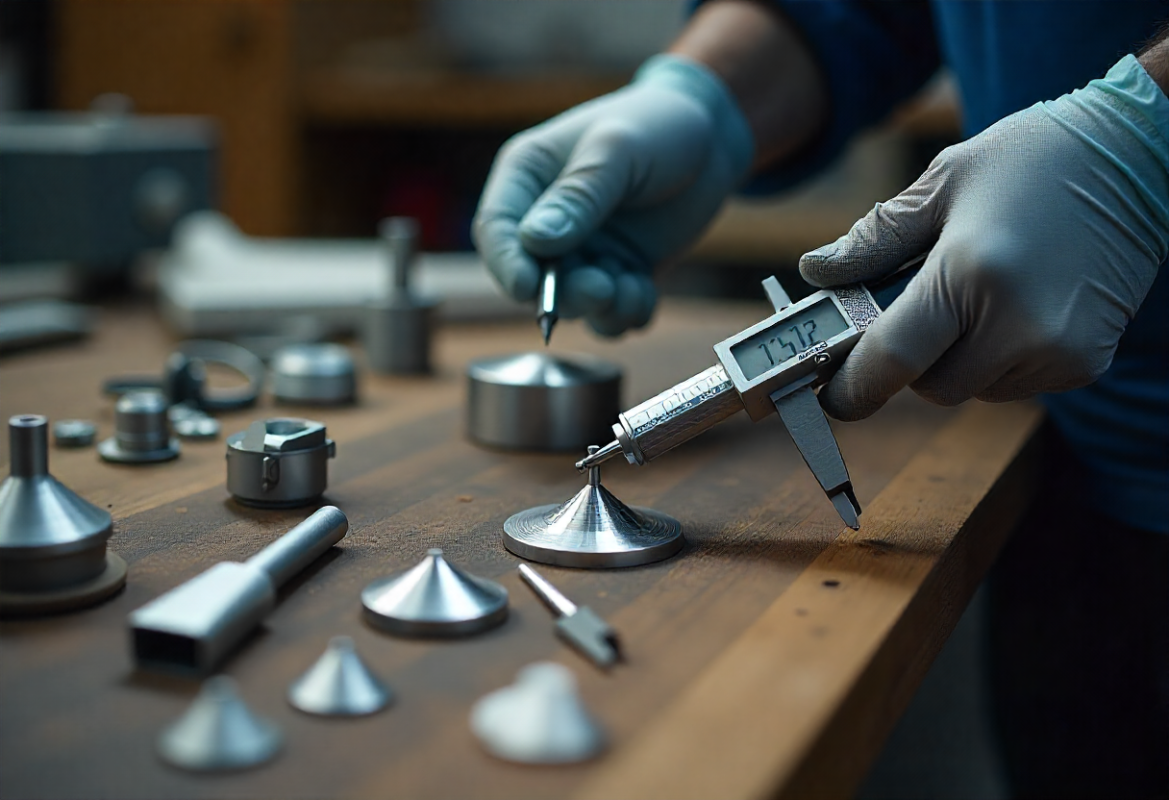
Spinning produces axisymmetric parts with excellent concentricity and surface finish. CNC spinning enables repeatable, low‑tooling cost production for reflectors, cones and flared parts. Flow forming produces thin‑walled cylinders with improved mechanical properties.
Advantages & limitations
- Low tooling investment vs deep draw for certain shapes
- Excellent cosmetic finish and concentricity for optical parts
- Geometry must be axisymmetric — not a replacement for stamping on complex flanges
Die Design, Strip Layout & Simulation
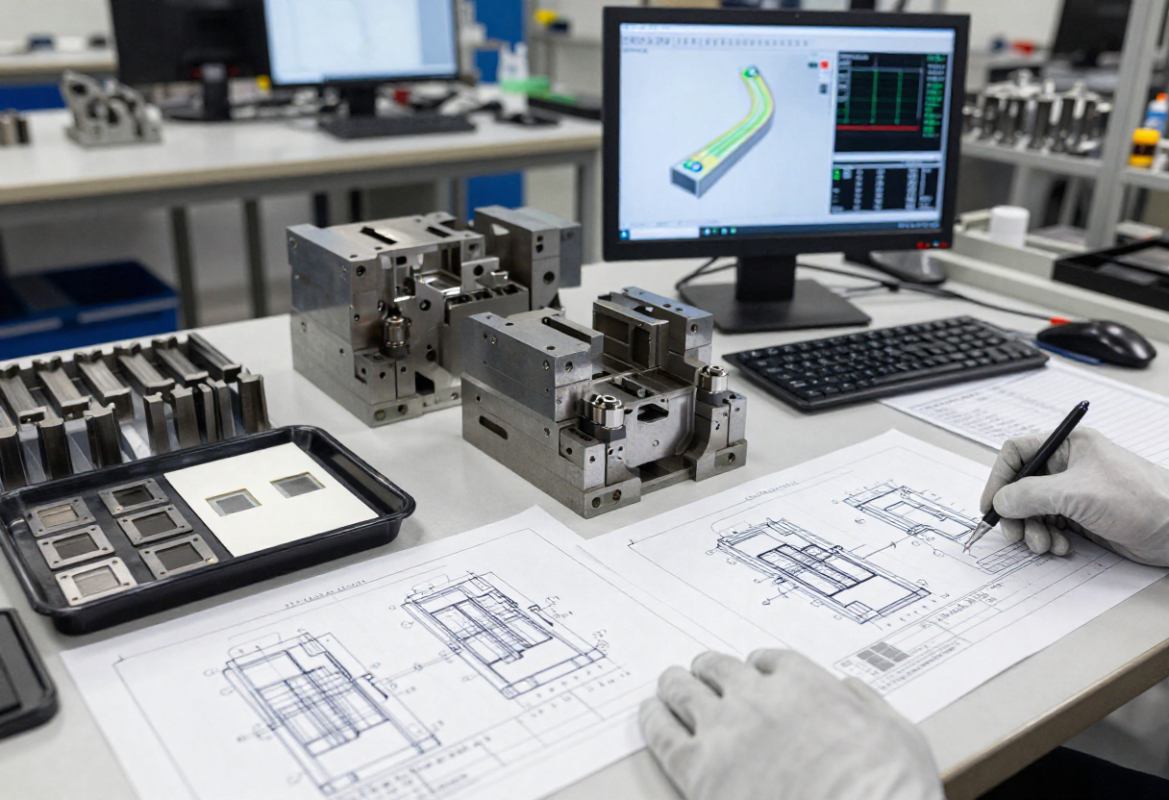
Die design begins with strip layout and blank optimization. We simulate material flow and forming loads, specify die steels and treatments, and provide 3D station models for tryout. Provisions for quick‑change inserts and modular stations reduce downtime for revisions.
Deliverables
- Strip & nest drawings, 2D/3D die models, station sequence
- Material recommendations, blank sizes and anneal schedules
- Die acceptance checklist, tryout report and operator setup sheets
Tool Materials, Heat Treatment & Coatings
Tool steels selected include S7, H13, D2 and other wear‑resistant grades. Heat treat, nitriding and PVD coatings (TiN, TiCN, DLC) extend die life and reduce galling. Replaceable inserts protect high‑wear stations and shorten repair time.
Tryout, First Article & Process Validation
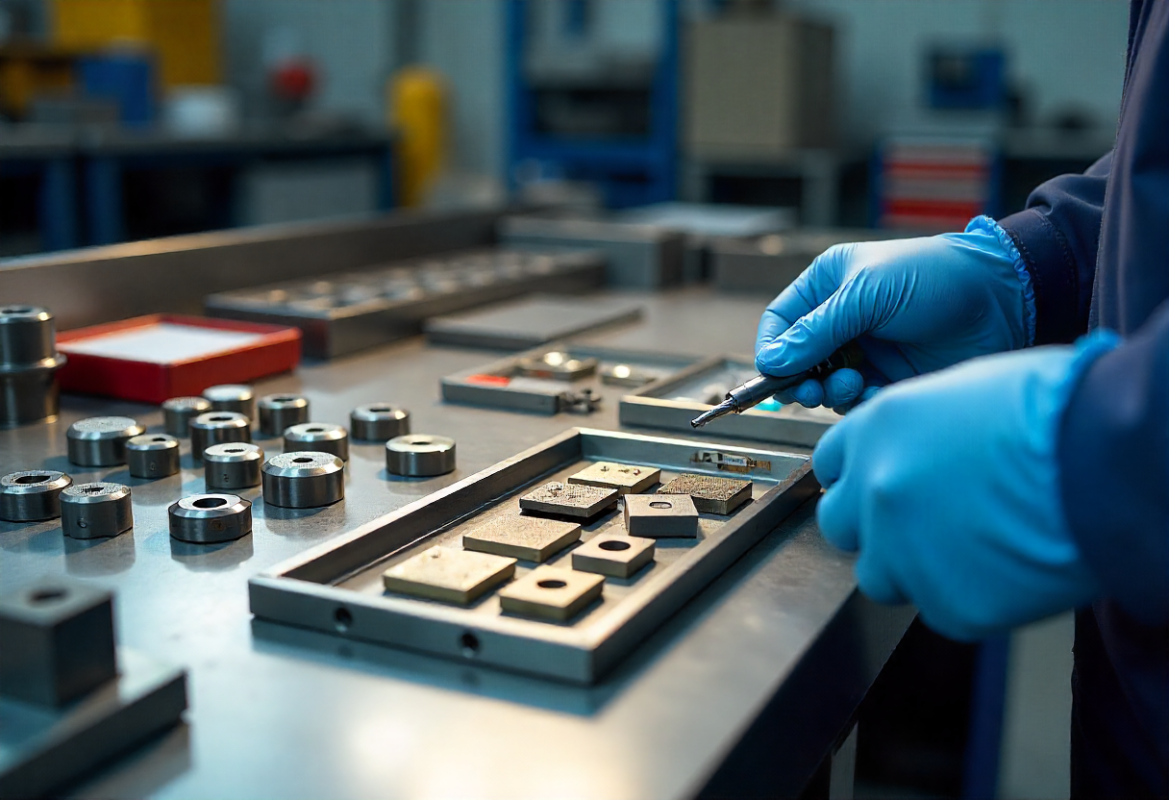
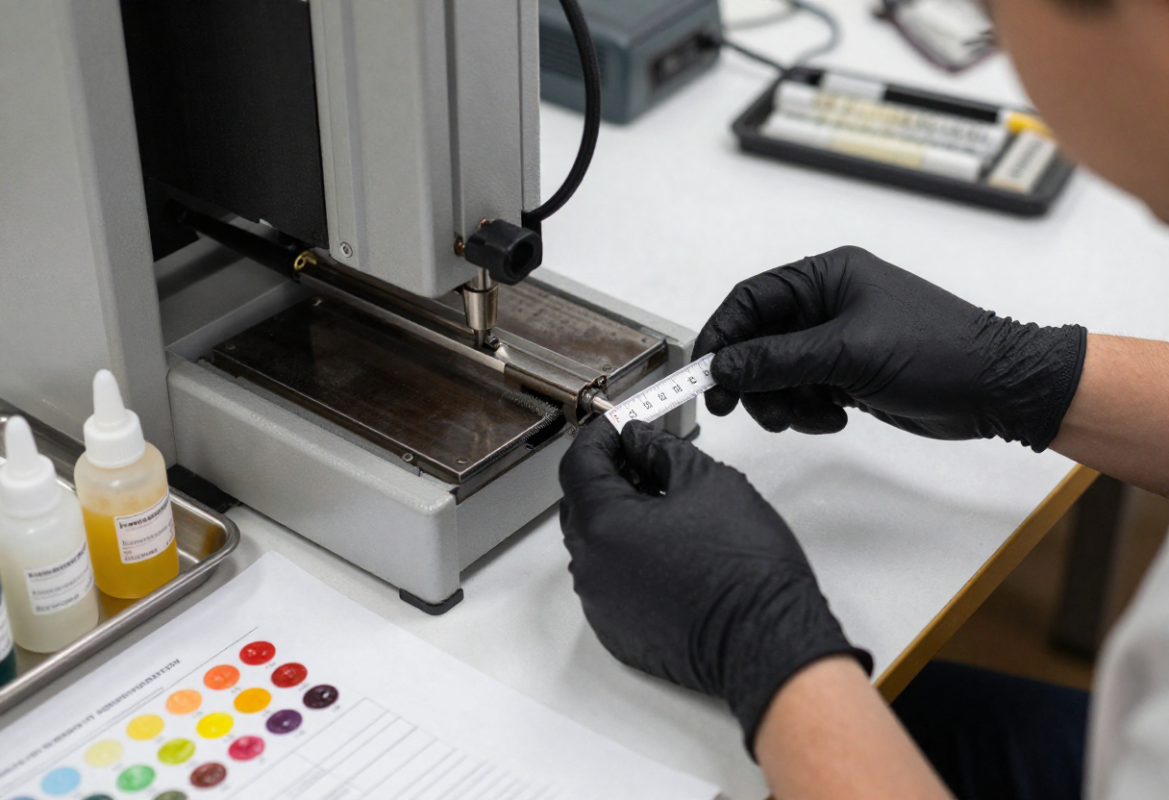
Die tryout validates form, burr control, tool life and cycle stability. Deliverables include first article reports, CMM inspection, strip galleries, burr analysis and SPC plans. We establish machine settings, lubrication and operator instructions during tryout.
Tryout outputs
- Sample strip and part gallery with dimensional data
- Die acceptance checklist and process window
- SPC and inspection frequency recommendations
Die Life, Maintenance & Refurbishment
Preventative maintenance, spare inserts and timely refurbishment minimize downtime. Services include die inspection, grinding, EDM rework, re‑hardening, slide rebuilds and spare station provisioning. Emergency repair lanes keep lines moving during unplanned events.
Secondary Operations & Finishing
We integrate post‑stamp operations such as hemming, bending, tapping, clinching, riveting, welding (laser/MIG/TIG), and assembly. Surface finishing includes deburring, polishing, shot blasting, anodize prep and plating. In‑di
Representative Specs & Lead Times
| Tool / Process | Typical Lead Time | Notes |
|---|---|---|
| Prototype laser/turret validation | Days – 2 weeks | Fast iteration, no die cost |
| Progressive stamping die | 8–20+ weeks | Station count, EDM and hardening affect schedule |
| Deep draw tool & tryout | 8–18 weeks | May require iterative anneal/tryout cycles |
| Spinning & flow forming setups | 2–8 weeks | Depends on mandrel complexity |
Quality, NDT & Inspection
Dimensional control uses CMM and optical gauging; NDT (ultrasonic, dye penetrant) is applied for critical structural parts. We deliver FAI/PPAP, Cpk capability studies and per‑lot inspection records for regulated programs.
Sustainability & Material Optimization
Strip nesting, blank optimization and process selection reduce scrap. We recommend recycled/responsibly sourced steels and aluminum when feasible and provide material recovery programs for stamping scrap.
Representative Projects
Progressive Bracket & Mount
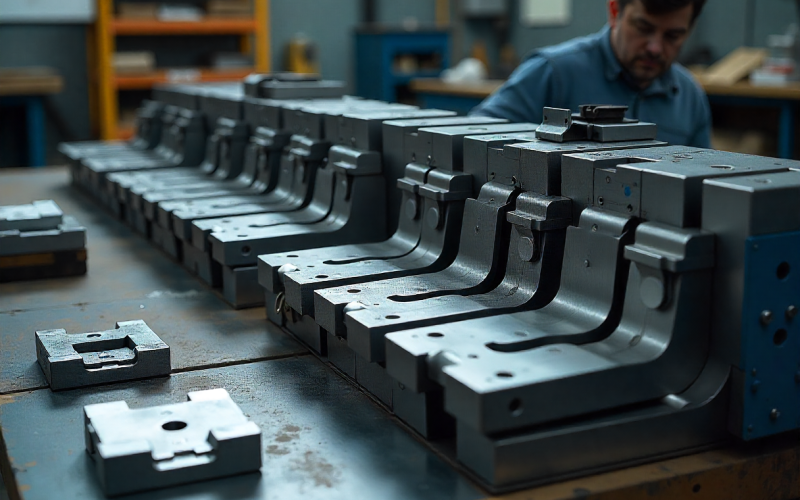
Multi‑station progressive die produced integrated bracket with formed tabs, pierced holes and in‑die clinching; delivered at 200k pcs/year with spare insert program.

Deep Draw LED Reflector
Multi‑stage deep draw with intermediate anneal produced thin‑wall seamless reflector with controlled wall thickness and high cosmetic finish, supplied with post‑machining and plating.
Frequently Asked Questions
When should I choose progressive stamping vs transfer die?
Progressive stamping is ideal for small to medium blanks produced in a continuous strip with many features. Transfer dies handle large blanks, heavier forming and complex sequence control where part handling between stations is required.
How do you prevent wrinkling and tearing in deep draw?
Control draw reduction per stage, select optimal die/punch radii, design blank holder and lubrication strategy, and use intermediate anneal where necessary for high strength or stainless materials.
What tolerances are typical for stamped parts?
Typical tolerances range from ±0.05–0.25 mm depending on feature, material and secondary machining; progressive dies with hardened tooling deliver the tightest repeatable tolerances at volume.
Start Your Sheet Metal Project
Upload flat patterns, 3D models, material grade and target volumes. We’ll return recommended processes (stamping, deep draw, spinning), tooling options, lead times and an amortization model — typically within 24 business hours.

