
Elastomer Molding — LSR Injection, Compression & Transfer Molding
Full-service elastomer molding: design and build LSR injection molds, compression and transfer molds, provide post‑cure schedules, trimming automation and cleanroom production for medical-grade parts. We handle material selection, tooling, validation and scale‑up from prototypes to production.
Typical Capabilities
LSR injection, stainless tooling, compression & transfer, post‑cure ovens, automated trim (laser/waterjet/punch), ISO 7/8 cleanroom molding and lot traceability.
Molding Processes Explained
LSR Injection Molding
Liquid Silicone Rubber (LSR) is a two‑component silicone processed on metering equipment into stainless cavities. Advantages: high repeatability, low contamination, rapid cycle times and excellent cosmetic finish. Common in medical, infant products, optics and consumer goods requiring soft‑touch surfaces.
Compression & Transfer Molding
Compression molding is cost effective for large or simple parts — a premeasured charge is compressed between heated platens. Transfer molding pushes preheated compound through a sprue system into cavities, reducing flash and improving flow for more complex shapes.
Overmolding & Insert Molding
Overmolding bonds elastomer onto plastics or metals to create integrated seals or soft‑touch features. Tooling includes insert locators and flow considerations to ensure adhesion and minimize movement during molding.
Tooling & Design Considerations
Elastomer tooling focuses on cavity finish, venting and thermal control. LSR cavities are typically stainless with mirror polish where optics or cosmetics are required. HCR (solid) silicone and rubber tooling uses tool steel inserts with proper vent/runner design and heaters.
Cavity Finish
Mirror polish for optical/cosmetic zones; textured finishes for grip areas.Venting & Gas Traps
Micro‑venting design to avoid pinholes and air entrapment; gas trap placement critical for LSR.
Heaters & Thermocouple Control
Multiple zones and precise control for uniform cure and repeatability.Materials & Typical Properties
We work with a wide range of elastomers. Key properties to specify: durometer (Shore A), compression set, tensile/tear strength, chemical compatibility and temperature range.
Practical initiatives
LSR / Silicones
Wide temp range (-60°C to +200°C), biocompatible grades available, low extractables for medical use.
EPDM / NBR / FKM
EPDM for weather, NBR for oil resistance, FKM for high temp/chemical resistance.
TPE / TPU
Thermoplastic elastomers for overmolding and recyclability; process like thermoplastics vs thermoset rubbers.
Durometer guidance
Common ranges Shore A 10–90. Softer materials need thicker walls and larger radii. Specify functional sealing compression and expected mating surface hardness.
Post‑Cure, Trim & Automation
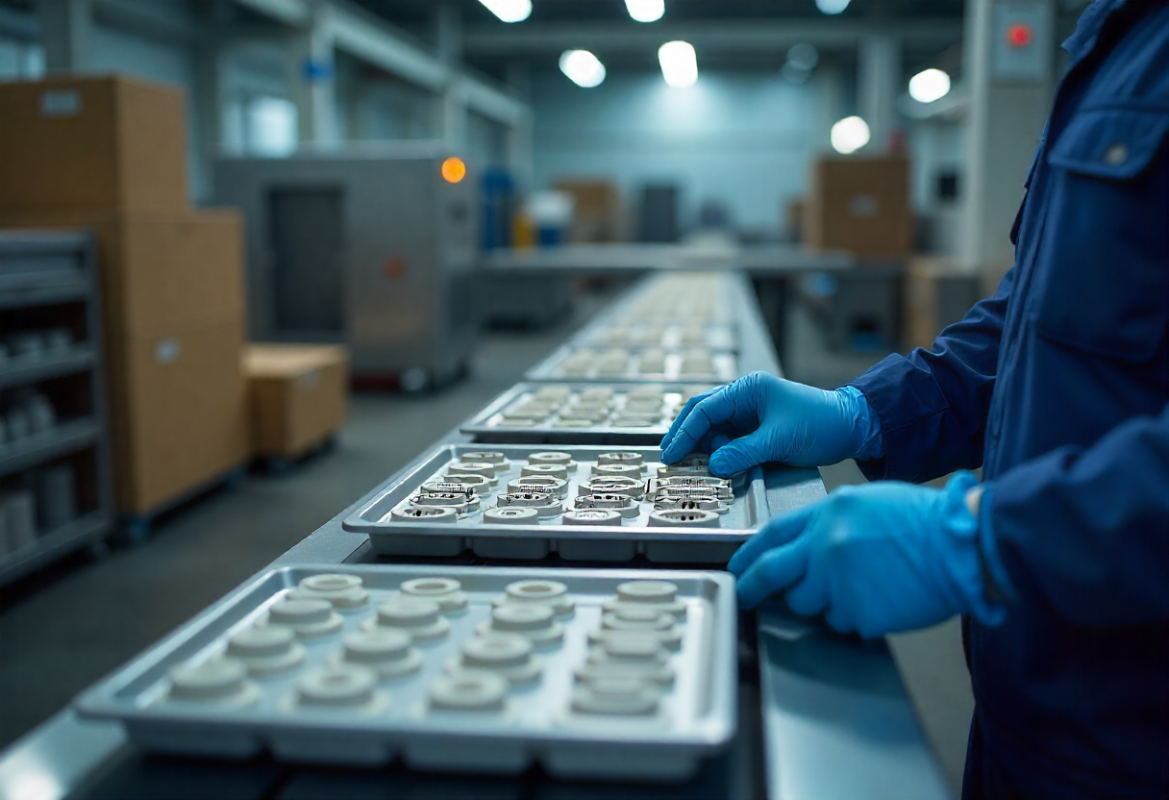
Many elastomers require post‑cure to stabilize mechanical properties and reduce volatiles. We integrate ovens (batch or continuous), automated trimming (waterjet, laser, punch), vision inspection and reject handling into production lines.
- Automated degating and flash removal where feasible
- Validated post‑cure schedule (time/temperature) documented per lot
- Automated vision and dimensional checks for cosmetics and critical features
Cleanroom Molding & Medical Grade Production
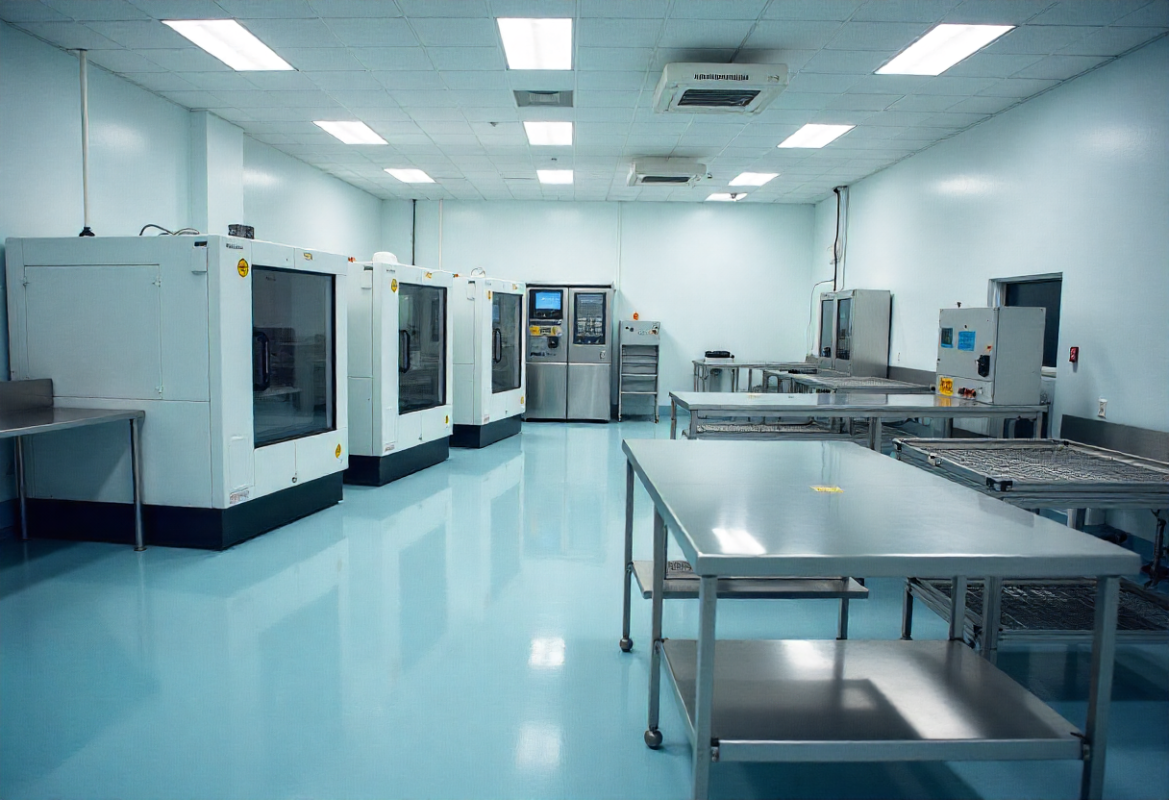
We operate ISO 7/8 cleanroom molding cells for medical and food contact parts. Services include material lot traceability, validated cleaning & sterilization prep, extractables testing coordination and packaging to meet regulatory needs.
Controls
- Controlled gowning & HEPA filtration
- Shot traceability and per‑lot packaging records
- Validated cleaning & packaging workflows
Testing & Qualification
Standard elastomer tests include durometer, tensile/elongation, tear, compression set, accelerated aging, chemical resistance and dimensional checks. For medical parts we coordinate extractables/biocompatibility testing and provide lot certificates.
Mechanical & environmental tests
- Durometer, tensile & tear
- Compression set & accelerated aging
- Thermal cycling, UV and ozone exposure
Inspection & reports
- First article inspection, dimensional CMM for critical datums
- Lot traceability and certificates of conformity
- SPC monitoring for high‑volume runs
Design for Elastomer Molding — Practical Tips
- Specify durometer and functional compression; softer compounds need thicker walls
- Use generous radii and fillets to lower tear stress; avoid sharp internal corners
- Design sacrificial flash lands for automated trimming and fixture handling
- Define sealing surfaces and specify finish & hardness of mating parts
- Consider overmold pull direction and retention features for inserts
| Feature | Recommendation | Notes |
|---|---|---|
| Min wall | ≥ 1.0 mm (varies by durometer) | Very soft compounds need thicker sections |
| Draft | 0.5°–2° | Increase for textured surfaces |
| Flash allowance | Provide consistent flash lands | Design for automated trimming access |
Representative Specs & Lead Times
Lead times depend on tooling type and material. Prototype compression/transfer molds: 2–4 weeks. Hardened LSR production molds: 6–12+ weeks. Specialty medical compounds may have longer lead times and MOQs — plan accordingly during NPI.
| Item | Typical Lead Time | Notes |
|---|---|---|
| Compression/Transfer prototype tool | 2–4 weeks | Quick validation runs |
| Hardened LSR production mold | 6–12+ weeks | Polish, heating & tryout add time |
| LSR medical grade compound | 1–6 weeks | Depends on supplier & certification |
Representative Projects
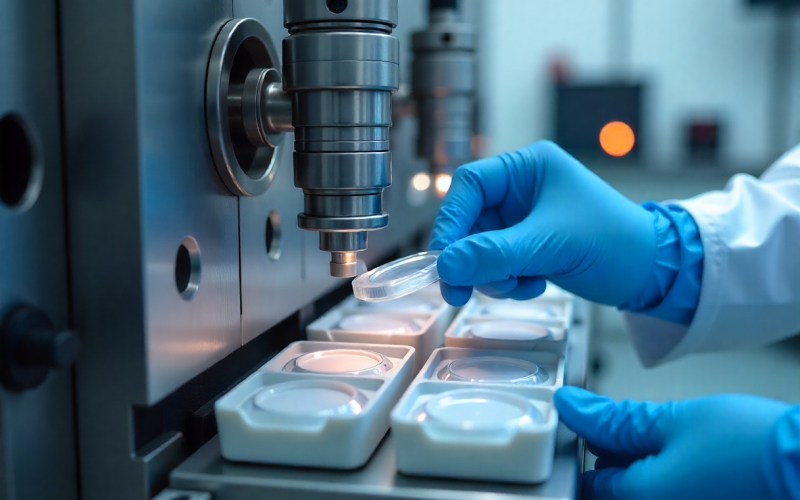
Medical Valve Seal (LSR)
Automated LSR cell with polished cavities, validated post‑cure schedule, ISO 7 cleanroom molding and full traceability; passed extractables and biocompatibility screening.
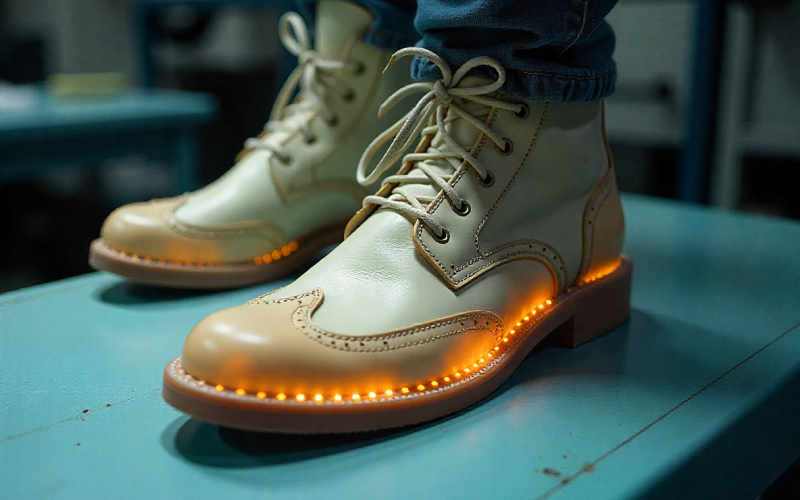
Automotive Boot (EPDM Compression)
Compression molded EPDM boot with designed flash lands for automated trimming and validated compression set under heat and oil exposure.
Frequently Asked Questions
What is the difference between LSR and HCR silicone?
LSR is a liquid, metered 2‑component silicone used in injection molding for high automation and cosmetics. HCR (solid) silicone is cured in compression/transfer molds and is suitable where LSR equipment isn’t justified.
How do you control part variability for low durometer compounds?
Control via precise charge mass, cavity temperature uniformity, optimized venting and automated trimming/inspection. Tool design and post‑cure stability reduce variability.
Can you produce cleanroom medical parts?
Yes — we provide ISO 7/8 cleanroom molding, validated post‑cure, lot traceability and support for regulatory testing/packaging workflows.
What tests are critical for seals?
Compression set, leak tests, material chemical compatibility, tensile/tear and aging under expected environmental conditions are typical — functional tests depend on application.
Start Your Elastomer Project
Upload CAD, target volumes, operating temperatures and chemical exposures. We’ll recommend candidate compounds, tooling approach (LSR vs compression/transfer), post‑cure plan and an estimated lead time — typically within 24 business hours.

