


MATERIALS

Plastics Engineering Thermoplastics, High‑Performance Polymers & Processing

A practical guide to plastic materials used in product development: material families, tradeoffs, typical applications, molding/processing notes, additives and testing. Use this guide to select candidate resins, anticipate manufacturing impacts and plan validation tests for NPI and production.

  • High‑performance polymers (PEEK, PEI), engineering thermoplastics (PA, POM, PC) and commodity resins
  • Molding processes: injection, overmold, extrusion, blow molding, thermoforming
  • Additives, fillers, flame retardancy, glass‑fill tradeoffs and tool wear considerations
Plastics Engineering Thermoplastics, High‑Performance Polymers & Processing

Material Families & Typical Uses

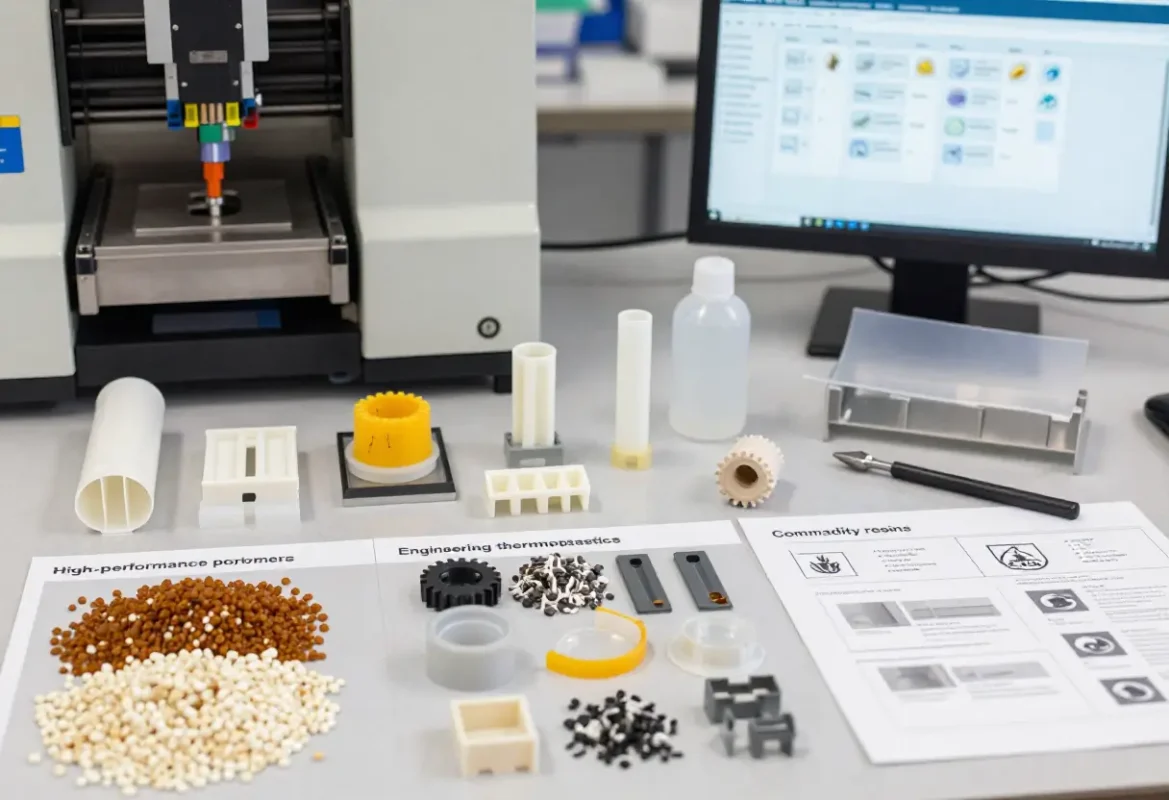
High‑Performance Polymers

High‑Performance Polymers

PEEK, PEI (ULTEM), PPS used for high temp, chemical exposure, electrical insulation and demanding mechanical loads.

Engineering Thermoplastics

Engineering Thermoplastics

PA (Nylon), POM (Acetal), PC, PBT, PET  structural components, gears, housings, connectors and functional assemblies.

Commodity Plastics

Commodity Plastics

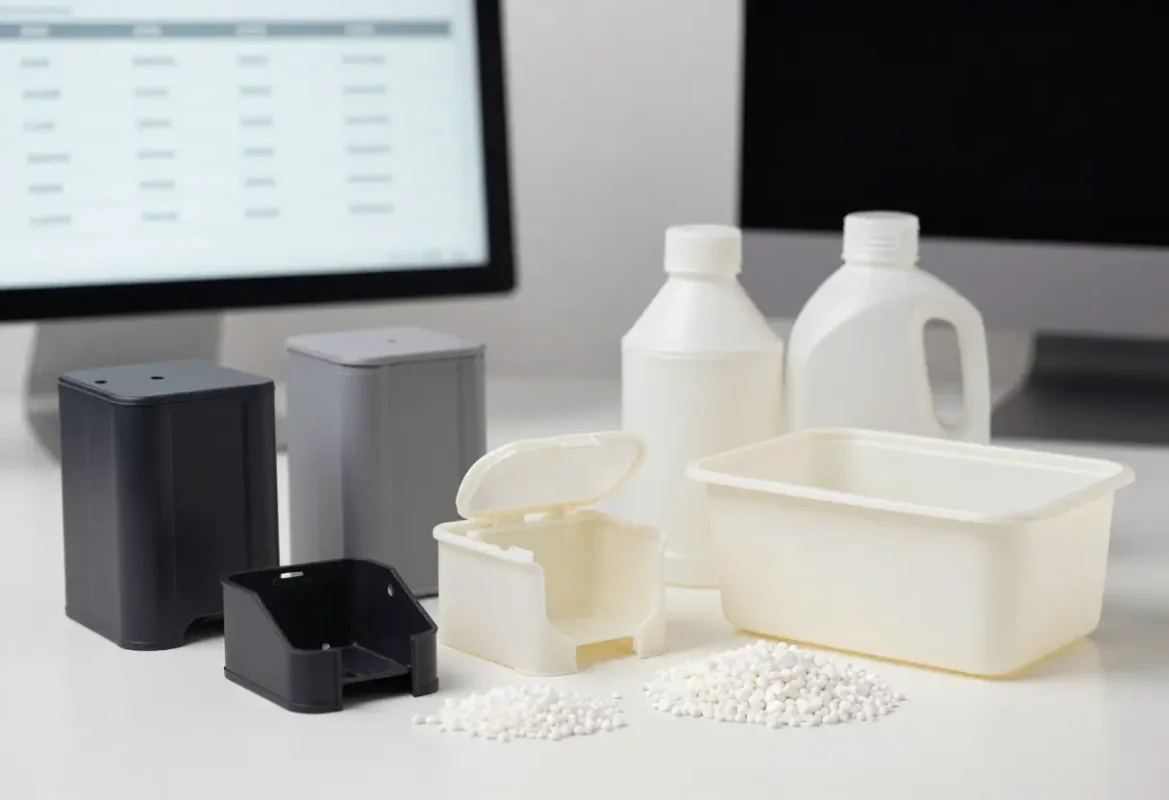
ABS, PP, HDPE, LDPE housings, consumer parts, low cost enclosures and large thin‑wall sections.

High‑Performance Polymers (PEEK / PEI / PPS)

Use these when sustained high temperature, harsh chemicals, radiation or demanding mechanical loads are present. They often require higher processing temperatures and robust tooling considerations.

Properties & tradeoffs

High Tg and continuous use temperatures (PEEK up to ~250°C) Excellent chemical resistance and dimensional stability Higher raw material cost and specialized processing equipment

Manufacturing notes

Requires high‑temperature molds, controlled drying, and often slower cycle times. Tooling must accommodate high melt temps and potential abrasion for filled variants.

Engineering Thermoplastics PA, POM, PC, PBT, PET

These are the workhorses for structural, moving and load‑bearing plastic parts. Glass fill and mineral fill variants extend modulus and heat deflection but affect tool wear and impact strength.

PA66 / PA6

Good toughness and wear resistance; hygroscopic — design for moisture absorption and dimensional change.

POM (Acetal)

Low friction and excellent dimensional stability for gears and sliding components.

PC (Polycarbonate)

High toughness and optical grades available; prone to scratching without coatings.

Additives, Fillers & Flame Retardants

Additives tailor properties: glass or mineral fillers increase stiffness; flame retardants meet safety standards; anti‑UV, antioxidants and pigments add durability and appearance. Each additive affects flow, mechanical behavior and processing.

Glass Fill

Increases modulus and dimensional stability; increases density and tool wear.

Mineral Fill

Reduces CTE, can improve thermal mass; may reduce impact strength.

Flame Retardants

Halogenated or non‑halogenated chemistries consider environmental and RoHS constraints.

Molding & Forming Processes

Choose the process that aligns with geometry, volumes and material: injection molding for complex high‑precision parts; overmolding for multi‑material assemblies; extrusion for continuous profiles; blow molding for hollow containers; thermoforming for large thin shells.

1

Injection Molding

Best for complex, repeatable parts; supports multi‑cavity and family tooling.

2

Overmolding / Insert Molding

Integrate elastomeric seals or soft touch features onto rigid substrates to reduce assembly.

3

Extrusion/Blow/Thermoform

Used for continuous profiles, hollow parts and sheet forming respectively; lower tooling cost for some geometries.

Design for Molding (DFM) Guidance

Good DFM reduces cycle time, rejects and cost. Key guidance includes uniform wall thickness, appropriate draft, gentle radii, well‑placed ribs and bosses, gate location, and avoiding thick sections that cause sink & internal stresses.

Design ItemGood PracticeNotes
Wall thicknessKeep uniform & thin where possibleVaries by material — consult resin datasheet
Ribs & bossesUse ribs for stiffness; boss thickness ≤ 0.6× wallGusset ribs reduce sink
Draft≥ 0.5° (cosmetic) to 2°+ (textured)Increase for textured surfaces
Gate locationPlace to balance flow and minimize weld linesCAE helps optimize
 

Sustainability & Recyclability

Design for recyclability by minimizing mixed materials and using compatible adhesives/coatings. Thermoplastics are generally recyclable; consider PCR (post‑consumer recycled) content and the tradeoff with mechanical properties. Document material composition for end‑of‑life processing.

Practical steps

  • Prefer single‑polymer constructions where possible
  • Avoid incompatible coatings that contaminate recycling streams
  • Specify recyclability and PCR content targets early in product design
Sustainability & Recyclability

Testing, Validation & Regulatory

Typical tests include tensile/impact, HDT/HDT, DSC/TGA for thermal behavior, flammability (UL94), and chemical resistance. For medical or food contact parts, run extractables/leachables and biocompatibility testing as required. Provide resin certificates and batch traceability.
testing

Common tests

Tensile, flexural, Izod/Charpy impact HDT, Vicat softening, TGA/DSC Flammability (UL94), CTI for electrical insulation

compliance

Compliance

RoHS / REACH declarations FDA / EU food contact approvals where applicable Medical: ISO 10993 and USP requirements for implants/contacts
Representative Specs & Lead Times

ItemTypical Lead TimeNotes
Unfilled commodity resinAvailable off‑the‑shelfShort lead times
Glass‑filled engineering resin1–4 weeks (supply dependent)MOQ and drying requirements
High‑performance polymer (PEEK/PEI)2–6+ weeksLonger lead times and higher cost
Custom color or masterbatch2–8 weeksDepends on batch creation and approvals

Representative Projects

Glass‑Filled PA66 Structural Bracket

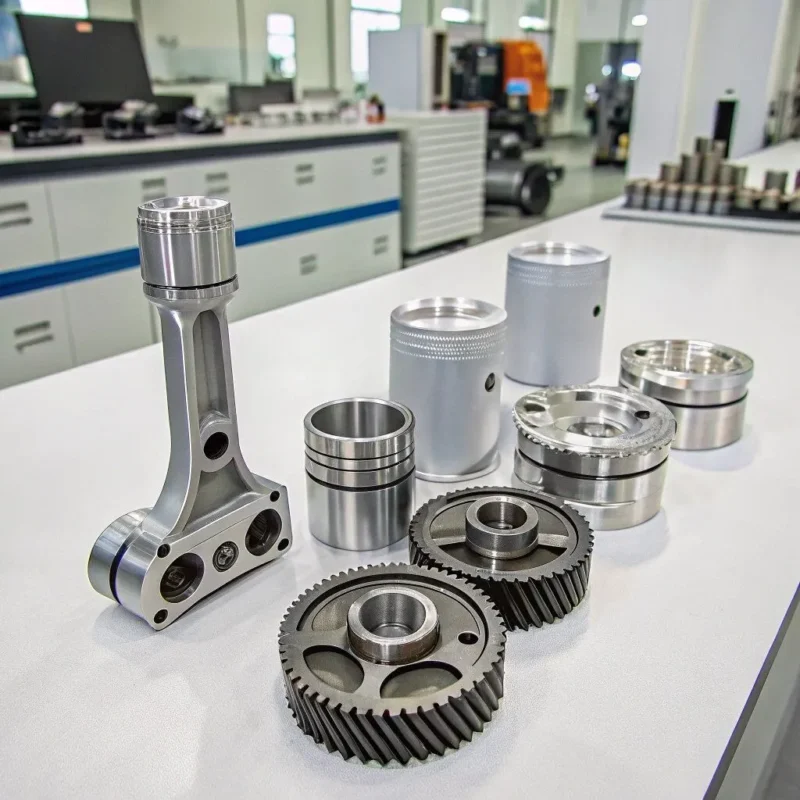
Replaced machined metal with glass‑filled PA66, reduced weight by 45% and achieved required stiffness; implemented increased gate size and tool coating to manage wear.

PC/ABS Housing with UV‑Stable Coating

Consumer electronics housing using PC/ABS blend with post‑paint and soft‑touch coating; designed draft and texture for consistent finish.

Need Help Selecting a Plastic?

Upload your part CAD, operating temperatures, mechanical loads and any regulatory constraints. Our materials team will propose candidate resins, processing notes and a test plan — typically within 24 business hours.
We make it fast, easy, and risk-free to get started.
Get Free Quote in 30 Minutes

All uploads are secure and confidential

Samples in 1 day, $50-200 fee refunded on 100+ units
Get a Quote in 30 Minutes
All uploads are secure and confidential.