


Metal Stamping Services

High-quality stamped metal parts—from short runs to production-scale volumes.

Start Your Metal Stamping Quote Here

STEP | STP | SLDPRT | IPT | PRT | SAT files

All uploads are secure and confidential.

 Xometry’s Instant Quoting Engine is covered by U.S. Pat. Nos. 11,086,292, 11,347,201, 11,693,388, 11,698,623, 12,099,341, and 12,189,361. Other patents pending.

The Stamping Process

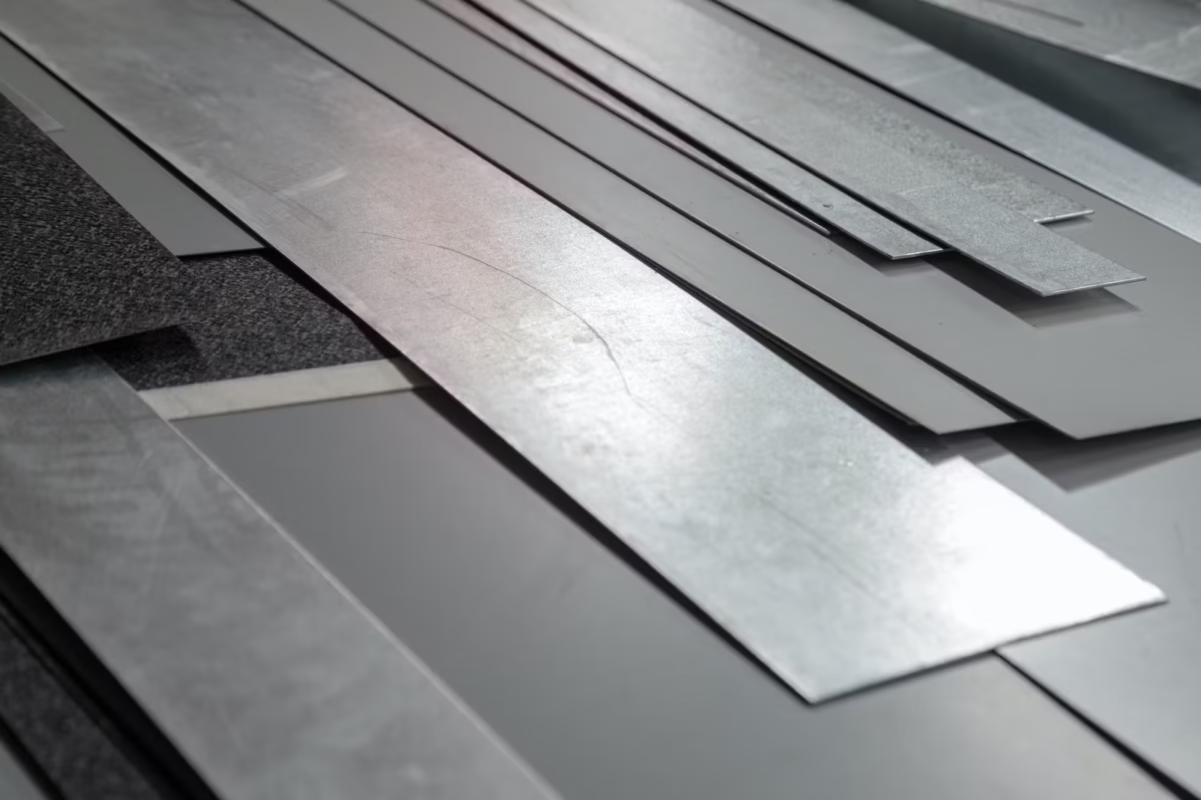
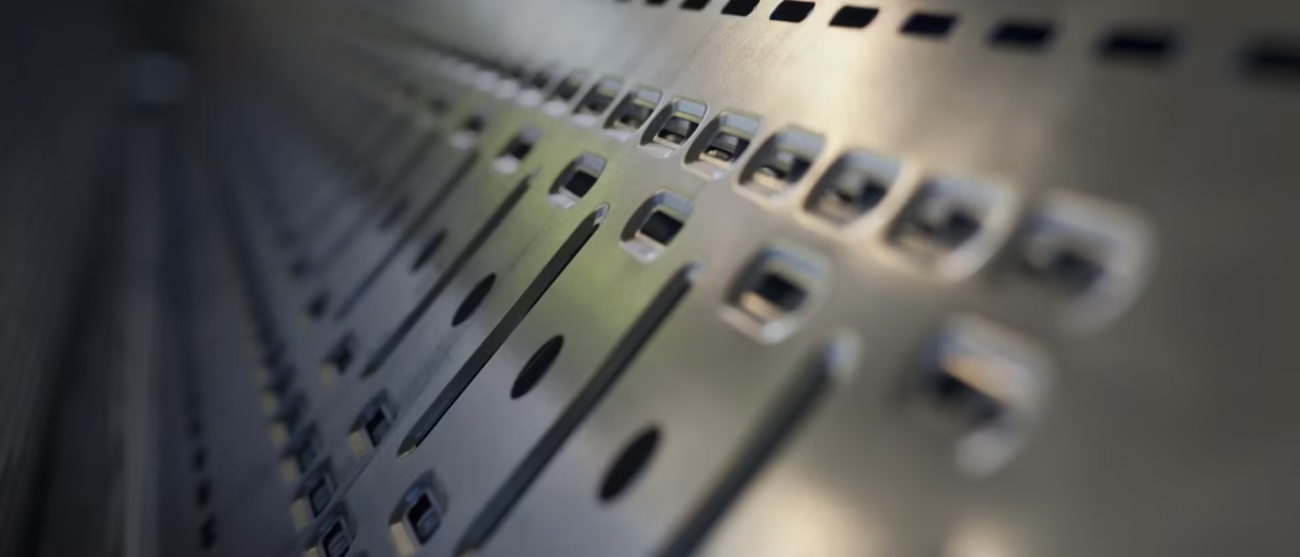
Metal stamping forms coil or sheet material into finished shapes using a press and a set of dies. Depending on part geometry and production needs, stamping may include operations such as blanking, punching, embossing, bending, and progressive-die forming.

Stamping is widely used to produce repeatable parts at scale—from brackets, clips, and connectors to larger panels and formed housings. Once tooling is built and validated, stamping can deliver excellent throughput and consistent part-to-part quality. For tighter critical features, secondary operations (such as machining, deburring, or finishing) may be added as needed.

LK Tools supports stamped parts across a range of materials and stamping methods. During quoting, we review your design and drawings to recommend an appropriate stamping approach based on complexity, thickness, tolerance needs, and target quantities.

Advantages of Metal Stamping

Stamping is often chosen when you need repeat production of formed sheet metal parts with predictable unit cost at volume.

Common advantages include:

  • Ability to produce complex forms efficiently (contours, louvers, emboss features)
  • Scales well from thousands to high-volume production programs
  • Certain methods (e.g., fineblanking, specialty forming) can support thicker or tighter-edge requirements (project-dependent)
  • Low cost per piece after tooling is validated
  • High throughput and consistent repeatability

Disadvantages of Metal Stamping

Stamping is powerful, but it has tradeoffs—especially early in the program.

Common disadvantages include:

  • Upfront tooling cost (dies, fixtures, process development)
  • Longer first-article timeline due to die design, build, and validation
  • Tooling may require iterations to achieve final tolerances, edge quality, and cosmetic expectations
  • Changes after tooling is finalized can require die modification or rework

Metal Stamping Materials

LK Tools supports stamping across common sheet metals. Availability depends on thickness, temper, and sourcing.

Common stamping materials include:

  • Steel (CRS such as 1008/1010/1018, etc.) — cost-effective and widely used for cold forming
  • Stainless steel (301, 304, 316/316L) — corrosion resistance and strength; selection depends on environment and forming requirements
  • Copper (e.g., C110) — strong electrical conductivity; commonly used for electrical components
  • Brass (e.g., 230 and 260) — good formability and corrosion resistance

Other sheet metals may be possible upon request. If you have a specific grade/temper or certification requirement, include it in your RFQ.

Finishing note (keep as a short line):
Stamped parts can be post-processed with finishes such as bead blasting, powder coating, chemical films, anodizing (material-dependent), or plating (project-dependent).

Ready to start your metal stamping project?

Types of Stamping

Different stamping methods are used depending on geometry, thickness, and volume. LK Tools can help match your design to the most practical process.

  • Progressive Die Stamping
    A strip is advanced through multiple stations to create features step-by-step. Efficient for higher volumes and multi-feature parts.
  • Transfer Die Stamping
    Similar forming progression, but the part is transferred between stations rather than remaining attached to a strip—useful for certain geometries.
  • Deep Draw Stamping
    Creates deeper cavities and cup-like shapes. Useful for enclosures and parts with significant depth (design-dependent).
  • Fourslide Stamping
    Forms from multiple axes for small intricate parts such as clips, springs, and electronic components (project-dependent).
  • Hydroforming
    Uses fluid pressure to form sheet into a die shape. Can create complex forms, but often requires trimming after forming (project-dependent).
  • Blanking / Fineblanking
    Blanking cuts a part out of sheet. Fineblanking is a precision variant used for smoother edges and tighter profiles (project-dependent).
  • Coining
    High-pressure forming used to create precise details; can also reduce burrs and harden local features.
  • Punching
    Creates holes or removes internal material from a workpiece.
  • Embossing
    Creates raised or recessed features for stiffness, branding, or functional geometry.
  • Bending / Flanging
    Forms angles and channels (U/V/L profiles) and creates tabs/flanges for assembly and stiffness.

Metal Stamping Production Volumes

Stamping volume expectations strongly influence the best tooling approach and overall economics.

Low Volume Production
Often used for bridge production, pilot runs, or controlled demand—typically most cost-effective once minimum tooling economics are met (program-dependent).

Medium Volume Production
Balances per-part cost and flexibility while taking advantage of stable stamping throughput.

High Volume Production
Best when demand is stable and high. Unit cost typically decreases as volume increases once tooling is amortized.

Short Run Stamping
Limited production with fewer process changes—often used for stable designs and limited quantities.

Long Run Stamping
Optimized for sustained production where the line may be tuned over time for quality, throughput, and cost.

Tight Tolerances

Stamped part tolerances depend on material, thickness, geometry, tool design, and the selected stamping method. For tight or critical-to-function features, suppliers often validate and refine the die design to hit the required output. Secondary operations (reaming, machining, deburring) may be used for features that require tighter control.

For best results:

  • Provide a 2D drawing with critical dimensions and tolerances called out
  • Identify cosmetic surfaces and any edge/burr requirements
  • Specify inspection requirements (dimensional reports, sampling plan) if needed

Metal Stamping by Industry

Metal stamping supports many industries and part types. Common sectors include:

  • Automotive
  • Aerospace (project-dependent)
  • Medical (project-dependent)
  • Industrial equipment
  • Electronics and electrical components
  • Lighting and appliance components

Why Use LK Tools’ Metal Stamping Services?

Endless Options

Choose from millions of possible combinations of materials, finishes, tolerances, markings, and certifications for your order.

Easy to Use

Get started with our easy-to-use platform and let our experts take care of managing the project from locating the right manufacturing partner to delivery logistics.

Vetted Network

We are ISO 9001:2015, ISO 13485, and AS9100D certified. Only the top shops that apply to become suppliers make it through our qualification process.
NEW!

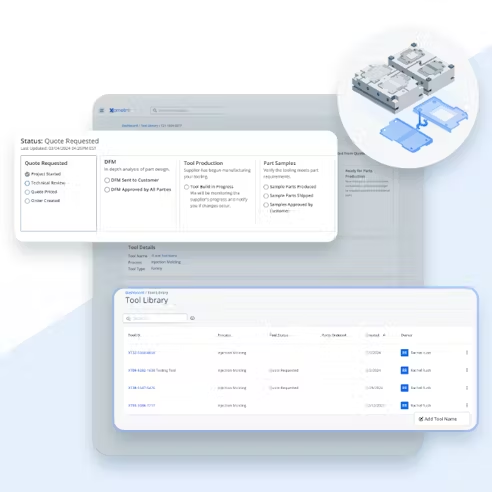
Tool Management

For tooling-based programs, revision control and clear status updates help maintain consistent production. If you need structured management for die revisions, approvals, and repeat releases, tell us during quoting so we can align the workflow.

Benefits (bullets):

  • Better management of tooling revisions and releases
  • Clear updates during sampling and production
  • Easier communication for approvals and changes
  • Improved project visibility across phases
We make it fast, easy, and risk-free to get started.
Get Free Quote in 30 Minutes

All uploads are secure and confidential

Samples in 1 day, $50-200 fee refunded on 100+ units
Get a Quote in 30 Minutes
All uploads are secure and confidential.